
REGINA BARBER: So, Scott, where would you like to start?
SCOTT DETROW: Regina, I feel like usually you're taking me deep out into the cosmos. But let's just start with, like, you know, something much closer to home.
BARBER: Right, that teen in my house--
DETROW: Yes.
BARBER: --that doesn't talk to me?
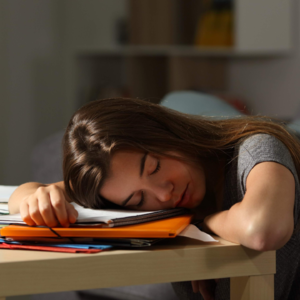
DETROW: The surly one who's apparently not getting enough sleep?
BARBER: Yes, yes. So researchers studied the sleep habits of high school students from 2007 to 2023, and they found that the number of teenagers getting insufficient sleep-- that's less than seven hours a night-- is on the rise. Now it's more than 3/4 of these high school students.
KATIA RIDDLE: These bad sleep habits were true across most demographics, races, genders, grades. And Scott, some of these kids are getting less than five hours of sleep a night.
DETROW: Oh.
RIDDLE: The results are in the medical journal JAMA.
DETROW: Any sense why this is happening?
RIDDLE: Well, the researchers tried to get at that. This data is from the CDC's Youth Risk Behavior Survey. This is a survey that more than 120,000 US high schoolers take every two years, answering questions about health risk behaviors, like alcohol use, cannabis use, and sexual activity.
BARBER: Yeah, and lack of sleep seemed to be a problem across the study groups in teens with and without behavioral issues, although the paper noted that the teens who reported depression or suicidal thoughts tended to sleep less than the others in the group.
DETROW: I can speak from experience because I shockingly got enough sleep last night, which does not always happen. I assume it is very bad to not get enough sleep, but I'm curious, like, what are pediatricians saying and quantifying this? Like, what specifically are they worried about?
BARBER: Yeah, I was wondering the same thing, because I have a teenager in high school. So I reached out to a pediatrician at Seattle Children's Hospital, Dr. Cora Collette Breuner. She didn't work on this study, but she thought this study was fascinating. She told me she'd seen the effects of insufficient sleep firsthand in her practice. She says that if teens don't get enough sleep--
CORA COLLETTE BREUNER: They're more depressed. They get in more car accidents. They do worse at school. They don't get good jobs. They don't maintain relationships. They don't have happy and productive lives.
DETROW: None of that is good. That's bad. So next question then is, like, what specific suggestions do doctors have to try and turn this around on the individual level or the broader level?
RIDDLE: Well, the study authors say, since insufficient sleep seems to be a problem plaguing most teens, there must be structural, environmental factors at play here. And they suggest broad interventions that could potentially reach most kids.
BARBER: For example, they point out that later school start times are linked to longer sleep and improved mental health. So interventions like that might help students across the board get better sleep.
🧬 更多听力和文本见公众号【琐简英语】,回复"1"可进【打卡交流群】

Short Wave|Teen sleep is getting worse. It's not just phones
3分钟 · 312·
312· 0
0
3120