

 28
28 0
0How Lego Became a Go-To Meme of the Propaganda Wars
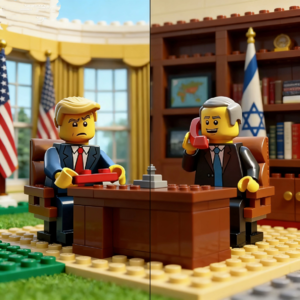
It began with a Lego-styled President Trump launching a missile strike. It was followed by a wave of Iranian counterstrikes taking out Dubai landmarks, Israel's parliament and the American embassy in Saudi Arabia. And all rendered in the same cutesy animation style that made "The Lego Movie" such a hit a decade or so ago.
The AI-assisted clip had nothing to do with the Danish company that makes the popular bricks. The new front in the information wars: Lego-ganda. And it’s quickly gaining momentum at a time when viral images of war can shape public opinion.
"Lego works because it is a universally recognized cultural cue, and cultural cues carry preloaded emotional associations that may bypass critical processing," says Lukasz Olejnik, a visiting fellow at the Department of War Studies, King's College London. "The familiar aesthetic lowers the audience's guard precisely when a political payload is delivered."
Last year, Denmark's ambassador to Canada gave Prime Minister Mark Carney a Lego shipping port; the Canadian leader spent part of his weekend assembling it, according to a post he made to X, in a subtle display of solidarity as Denmark tried to ward off Trump's attempts to gain control of Greenland.
America, on the other hand, isn’t trying to pull any heartstrings. The messaging from the Trump administration is directed more toward its domestic audience, conveying much of it through imagery taken from Wii videogames or gung-ho, shoot-’em-up games like “Call of Duty” and “Grand Theft Auto.”
"The White House is operating with a different set of cultural cues. It is a narrative operation using a shared cultural vocabulary to reach a specific demographic. There's no going back," said Olejnik. "Trolling is now a standard tool of statecraft."
生词好句
Lego 英 [ˈleɡəʊ] 美 [ˈleɡoʊ] n. 乐高(拼装积木品牌)
1932年,在丹麦的比隆镇,一位因经济危机而失业的中年人克里斯蒂森,用边角料给孩子做木头玩具。他给作坊取名"LEGO"(乐高)——来自丹麦语"leg godt",意为"play well"(好好玩)。
LEGO Masters 乐高创作大赛
go-to 英 [ˈɡəʊ tuː] 美 [ˈɡoʊ tuː] 首选的,第一时间想到的
go-to restaurant "御用"餐厅
When it comes to quick dinner ideas, pasta is my go-to. 说到"快手菜"晚餐,意面是我的首选。
counterstrike 英 [ˈkaʊntəstraɪk] 美 [ˈkaʊntərstraɪk] n. 反击;还击
counter作前缀表示"反......"
strike n. 打击
Counter-Strike 游戏《反恐精英》
take out (本文)摧毁、消灭(目标);打包,外卖
The airstrike took out the enemy's command center in a matter of seconds.空袭在几秒钟内摧毁了敌方指挥中心。
render 英 [ˈrendə] 美 [ˈrendər] v.(本文)动画渲染;使成为
render something useless 使某物变得无用
cutesy 英 [ˈkjuːtsi] 美 [ˈkjuːtsi] adj. 故作可爱的;刻意卖萌的
guard 英 [ɡɑːd] 美 [ɡɑːrd] n. 心防,戒备心
let your guard down 放松警惕
catch someone off guard 打对方一个措手不及
Never let your guard down during a negotiation, especially when the other side starts being overly friendly.谈判时永远不要放松警惕,尤其是对方开始过分友善的时候。
pull heartstrings 打动人心;拨动心弦
tug at one's emotions 牵动某人情绪
"strike a chord"(引发共鸣)比"pull heartstrings"更中性,可用于非煽情场合。
It struck a chord with me. 它引发了我的共鸣。
chord n.(音乐)和弦
The documentary about migrant workers struck a chord with millions of viewers across the country.这部关于农民工的纪录片在全国引发了数百万观众的共鸣。
gung-ho 英 [ɡʌŋˈhəʊ] 美 [ɡʌŋˈhoʊ] adj. 热血好战的,冲劲十足的;n. 工合(中国工业合作社)
shoot-'em-up 英 [ˈʃuːt əm ʌp] 美 [ˈʃuːt əm ʌp] (本文)adj. 热血好战、暴力快感至上的 n. 无脑射爆类的射击游戏
'em是them的口语缩写;up是加强语气的副词
There's no going back. 没有回头路了。
Once you've experienced the freedom of working for yourself, there's no going back to a nine-to-five.一旦你体验过自己做老板的自由,就回不去朝九晚五的日子了。
