
 25
25 0
0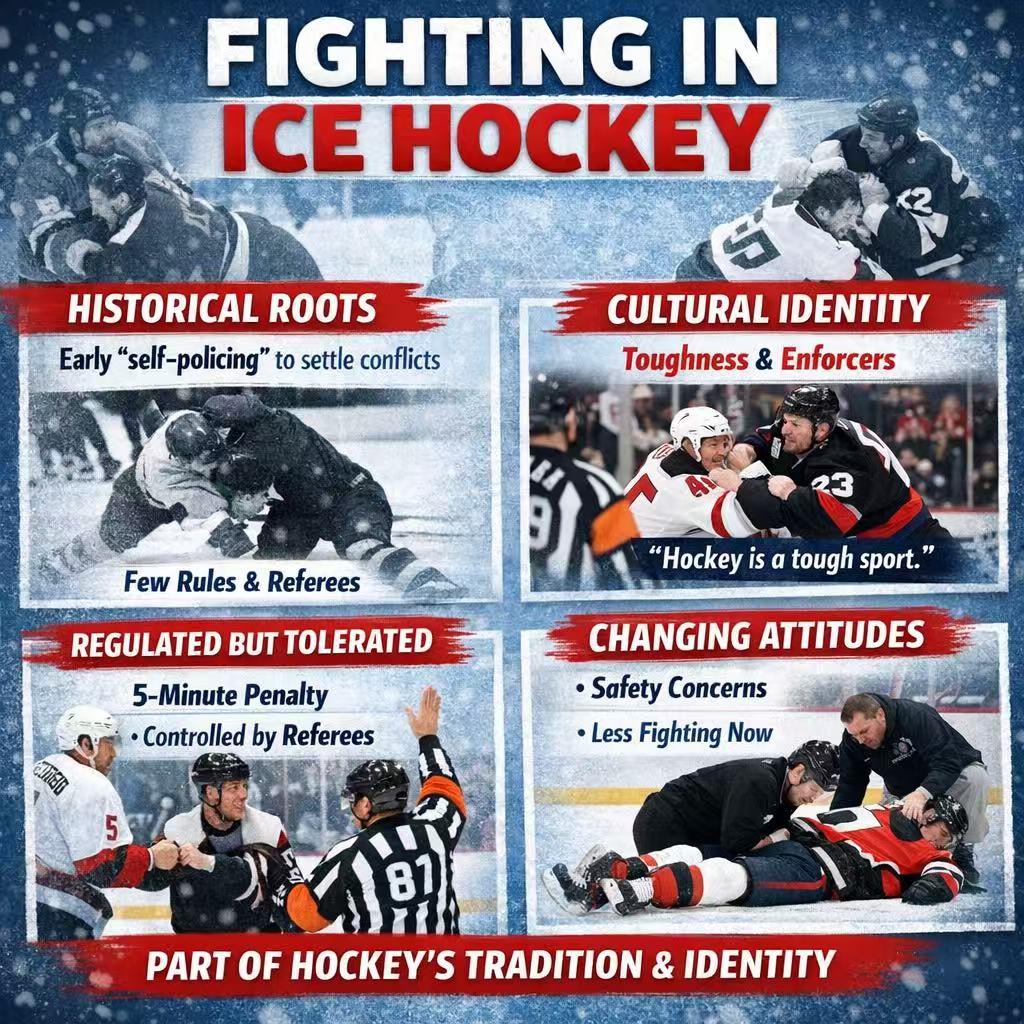
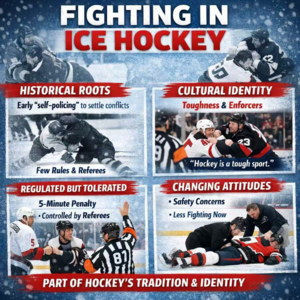
Ice hockey is one of the few modern sports where fighting is still tolerated, and this unusual feature is deeply rooted in its history and culture. In the early days of hockey, there were fewer formal rules and limited referee intervention. As a result, players often relied on themselves to resolve conflicts on the ice. This led to the development of what is known as a “self-policing” system, in which players would respond directly to dangerous or unfair behavior.
Over time, fighting became an accepted, though regulated, part of the game, especially in professional leagues such as the NHL. While players who fight are penalized with a five-minute major penalty, referees may allow fights to continue briefly under controlled conditions. This reflects a balance between discipline and tradition.
Culturally, hockey—particularly in countries like Canada—places a strong emphasis on toughness and resilience. The role of the “enforcer,” a player responsible for protecting teammates and responding to aggression, further illustrates how fighting has been integrated into the sport’s identity. For many fans, it also adds excitement and intensity to the game.
However, in recent years, attitudes have begun to shift. Concerns about player safety, especially brain injuries, have led to stricter regulations and a gradual decline in fighting. Despite this, its historical and cultural significance continues to shape how the sport is played and perceived today.
⸻
冰球是少数仍然容忍打架的现代运动之一,而这一特殊现象深深植根于其历史与文化之中。在冰球发展的早期阶段,比赛规则较少,裁判的干预也十分有限。因此,球员往往依靠自己来解决场上的冲突,这逐渐形成了一种所谓的“自我执法”机制,即球员通过直接回应危险或不公平行为来维持秩序。
随着时间的推移,打架逐渐成为比赛中被接受但受到限制的一部分,尤其是在像NHL这样的职业联赛中。虽然参与打架的球员会被判罚五分钟的大罚,但裁判在特定情况下会允许打架短暂进行,从而在纪律与传统之间取得一种平衡。
从文化角度来看,在加拿大等国家,冰球强调强硬与坚韧的精神。“打手”(enforcer)这一角色的存在,正体现了打架在这项运动中的地位——他们负责保护队友并回应对方的攻击。对许多观众而言,这也为比赛增添了紧张感与观赏性。
然而,近年来,人们的态度正在发生变化。随着对球员安全,尤其是脑部损伤问题的关注增加,相关规则也日趋严格,打架现象逐渐减少。尽管如此,其历史与文化意义仍然深刻影响着这项运动的规则与认知。
📘 中考词汇
1️⃣ tolerate /ˈtɒləreɪt/
词性:v.
中文:容忍;忍受
搭配:
tolerate sth / tolerate doing sth
tolerate bad behavior
例句:
• We cannot tolerate such rude behavior.
我们不能容忍这种粗鲁的行为。
• She can’t tolerate being interrupted.
她无法忍受被打断。
考点:
• 后面常接 doing(动名词)
• ≈ put up with(口语)
⸻
2️⃣ limit /ˈlɪmɪt/
词性:n./v.
中文:限制;极限
搭配:
set a limit / limit sth / time limit
例句:
• There is a time limit for this test.
这次考试有时间限制。
• The teacher limited the use of phones.
老师限制了手机的使用。
考点:
• limit to(把……限制在)
• without limit(无限地)
⸻
3️⃣ resolve /rɪˈzɒlv/
词性:v.
中文:解决;下定决心
搭配:
resolve a problem / resolve to do sth
例句:
• They finally resolved the conflict.
他们最终解决了冲突。
• He resolved to study harder.
他下定决心更加努力学习。
考点:
• 两个意思:解决 + 决心
• resolve to do(固定结构)
⸻
📙 高考词汇
4️⃣ intervention /ˌɪntəˈvenʃn/
词性:n.
中文:干预;介入
搭配:
government intervention / medical intervention
例句:
• The government’s intervention helped the economy.
政府的干预帮助了经济。
• Early intervention can save lives.
早期干预可以挽救生命。
考点:
• 来自 intervene(介入)
• 常用于正式语境(政治/医学/社会)
⸻
5️⃣ resilience /rɪˈzɪliəns/
词性:n.
中文:韧性;恢复力
搭配:
mental resilience / show resilience
例句:
• She showed great resilience after failure.
她在失败后表现出极强的恢复力。
• Children often have strong resilience.
孩子通常具有很强的适应能力。
考点:
• 抽象名词(常考阅读)
• ≈ ability to recover
⸻
6️⃣ penalty /ˈpenəlti/
词性:n.
中文:惩罚;罚款;点球
搭配:
pay a penalty / penalty for sth / a heavy penalty
例句:
• He paid a penalty for breaking the rules.
他因违反规则受到了惩罚。
• The player got a penalty in the game.
那名球员在比赛中被判罚。
考点:
• 体育语境:点球 / 判罚
• penalty for doing sth(因……受罚)
