
What can magic teach us about the brain
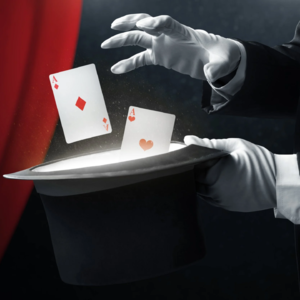
You've probably seen the impossible happen, or at least thought you have. When a magician makes a card disappear, or throws a ball into the air, only for it to vanish, it seems that they are using amazing powers. But the magic isn't happening on stage. It's actually all inside your brain.
These illusions work because of essential processes that happen in our brains. Our senses provide an enormous amount of information about our surroundings. Our brains have evolved ways of prioritising what's important. We tend to notice the things that are most significant and remember those which have most meaning for us. What we perceive that we see or remember that we saw is actually a mental image.
These mental processes are exploited by illusionists to trick us into perceiving things in a particular way. In one famous trick, a ball is thrown into the air twice and caught and then vanishes into thin air on the third throw.
This third throw is actually just a hand movement. Our brains predict that the ball will leave the magician's hand so we think we see it. The same process makes a dog run for a stick when we pretend to throw it.
During a magic show, we are often manipulated to think that we have a freer choice than we actually do. Magician-turned-psychologist Gustav Kuhn highlights how a performer's gaze can direct our attention towards some things and divert it away from others. Even babies naturally tend to follow where someone is looking.
Kuhn has become a researcher using the techniques behind different magic tricks to see what we can learn about how the brain works. He's even teamed up with a toy manufacturer to produce magic sets that explain our mental processes.
Understanding these could be important because while magicians use these deceptions to entertain us, others use similar approaches to mislead us or spread disinformation.
词汇表
magician [məˈdʒɪʃən] n. 魔术师,变戏法的人
vanish [ˈvænɪʃ] vi. 消失,突然不见
illusion [ɪˈluːʒən] n. 错觉,幻觉,假象
prioritise [praɪˈɒrətaɪz] vt. 优先处理,确定优先顺序
perceive [pəˈsiːv] vt. 认为,感知,察觉
mental image 心理图像,脑海中的画面
exploit [ɪkˈsplɔɪt] vt. 利用,开发,发挥
illusionist [ɪˈluːʒənɪst] n. 幻术师,魔术师
trick someone into 诱使/欺骗某人做某事
vanish into thin air [ˈvænɪʃ] 凭空消失,化为乌有,消失得无影无踪
manipulate [məˈnɪpjuleɪt] vt. 操纵,控制,摆布
magician-turned-psychologist 魔术师出身的心理学家,从魔术师转型为心理学家的人
gaze [ɡeɪz] n. 凝视,注视,目光
divert [daɪˈvɜːt] vt. 分散,转移(注意力),使转向
magic tricks 魔术技巧,戏法
team up with 与…合作,联手
toy manufacturer [ˌmænjʊˈfæktʃərə] 玩具制造商
magic sets 魔术套装,魔术道具组
deception [dɪˈsepʃən] n. 欺骗,骗术,骗局
mislead [ˌmɪsˈliːd] vt. 误导,使误入歧途
disinformation [ˌdɪsɪnfəˈmeɪʃən] n. 虚假信息,假消息
📖 翻译、pdf见公众号【琐简英语】,回复"1"可进【打卡交流群】

BBC随身英语|魔术揭示了哪些关于大脑的奥秘?
2分钟 · 2590·
2590· 0
0
25900