
 21
21 0
0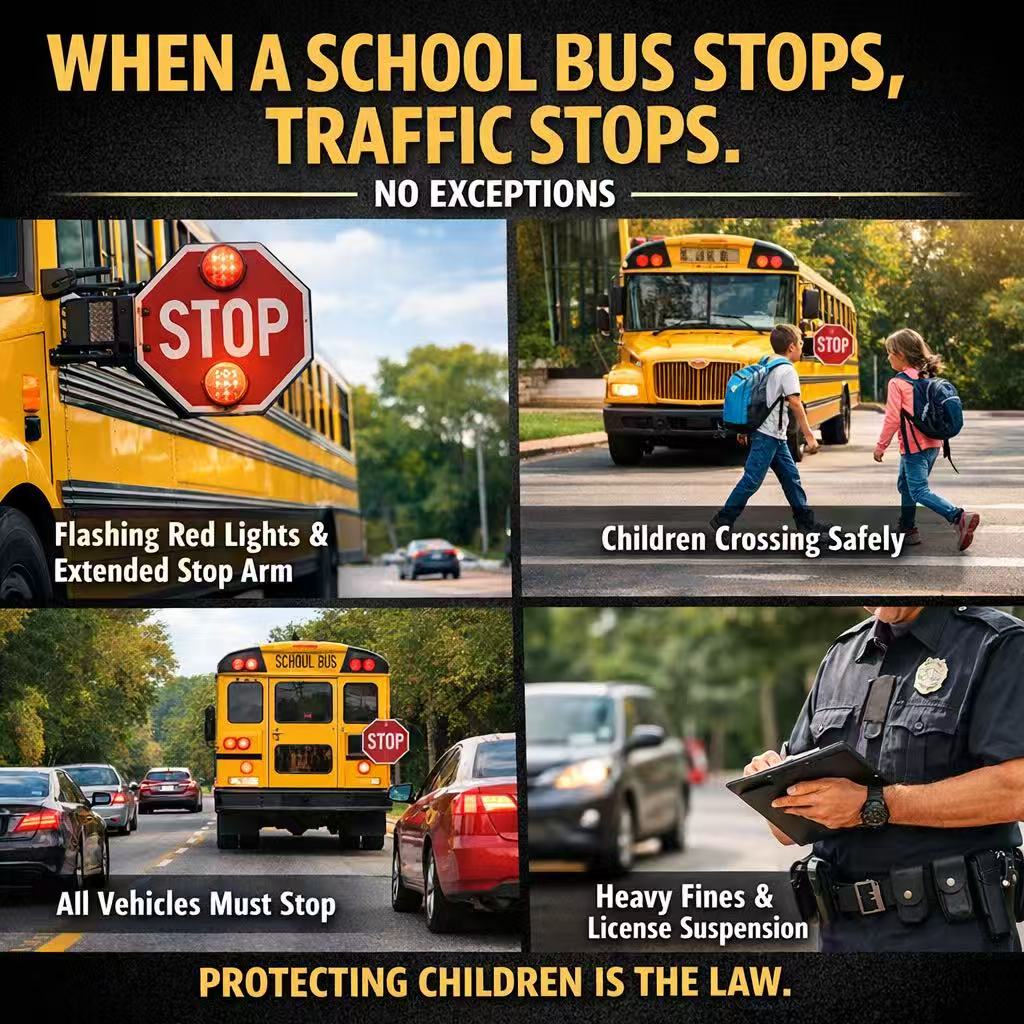
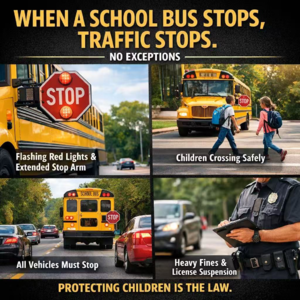
In the United States, school buses are granted what is often described as an “absolute right of way,” a rule designed to protect one of the most vulnerable groups on the road—children. When a school bus stops to load or unload students, it activates flashing red lights and extends a stop arm. At that moment, all nearby vehicles are required to come to a complete stop, regardless of direction, unless there is a physical median separating the lanes.
This rule may seem strict, but it reflects a deeper principle: safety must always take precedence over convenience. Children are unpredictable; they may suddenly cross the street without checking for traffic or become distracted. By forcing all vehicles to stop, the law creates a temporary safety zone where children can move freely without the immediate threat of passing cars.
The penalties for violating this rule are severe, including heavy fines, points on a driver’s license, and even license suspension. These consequences are not meant to punish drivers harshly, but to deter behavior that could lead to tragic accidents.
Ultimately, the school bus law is a powerful reminder that responsible driving is not just about following rules, but about protecting lives. When a school bus stops, traffic stops—no exceptions. This simple principle helps ensure that every child can travel to and from school safely.
⸻
🇨🇳 中文翻译
在美国,校车被赋予一种被称为“绝对路权”的特殊权利,这一规定旨在保护道路上最脆弱的群体之一——儿童。当校车停下来让学生上下车时,它会打开红色闪光灯并伸出停牌。在这一刻,除非道路中间有物理隔离带,否则所有车辆,无论方向,都必须完全停车。
这一规定看似严格,但它体现了一个更深层的原则:安全永远优先于便利。儿童具有不可预测性,他们可能突然横穿马路而不观察交通情况,或者因为分心而忽视危险。通过强制所有车辆停车,法律为孩子们创造了一个临时的安全区域,使他们能够在没有车辆威胁的情况下自由通行。
违反这一规定的处罚非常严厉,包括高额罚款、驾照扣分,甚至可能被吊销驾照。这些惩罚并非单纯为了严厉制裁驾驶员,而是为了阻止可能导致悲剧事故的行为。
归根结底,校车法律提醒我们,负责任的驾驶不仅仅是遵守规则,更是保护生命。当校车停下时,所有车辆必须停下——没有例外。正是这一简单的原则,保障了每一个孩子能够安全往返学校。
📘 中考词汇
1. design /dɪˈzaɪn/
中文:设计;计划
用法:design sth / design for sth
例句:The system is designed to protect children.
这个系统是为了保护儿童而设计的。
⸻
2. load /ləʊd/
中文:装载;负担;(上下车)载人
用法:load…with / load…into
例句:The bus is loading students at the stop.
校车正在站点接学生上车。
⸻
3. strict /strɪkt/
中文:严格的
用法:be strict with sb / be strict about sth
例句:The law is very strict about road safety.
法律对道路安全要求非常严格。
⸻
4. reflect /rɪˈflekt/
中文:反映;体现
用法:reflect sth / reflect on sth
例句:This rule reflects the importance of safety.
这条规则体现了安全的重要性。
⸻
📗 高考词汇
5. grant /ɡrɑːnt/
中文:授予;给予(权利)
用法:grant sb sth / grant permission / grant rights
例句:The law grants school buses special rights.
法律赋予校车特殊权利。
⸻
6. vulnerable /ˈvʌlnərəbl/
中文:脆弱的;易受伤害的
用法:be vulnerable to sth
例句:Children are vulnerable to traffic accidents.
儿童容易受到交通事故的伤害。
⸻
7. median /ˈmiːdiən/
中文:(道路)中央隔离带
用法:a raised median / central median
例句:Cars on the other side of the median may continue.
在隔离带另一侧的车辆可以继续行驶。
⸻
8. suspension /səˈspenʃən/
中文:暂停;(驾照)吊销
用法:license suspension / suspend a license
例句:He faced a license suspension for breaking the rule.
他因违反规定面临驾照吊销。
⸻
9. deter /dɪˈtɜː(r)/
中文:阻止;威慑
用法:deter sb from doing sth
例句:Heavy fines are used to deter drivers from speeding.
高额罚款用来阻止司机超速。
