

 26
26 0
0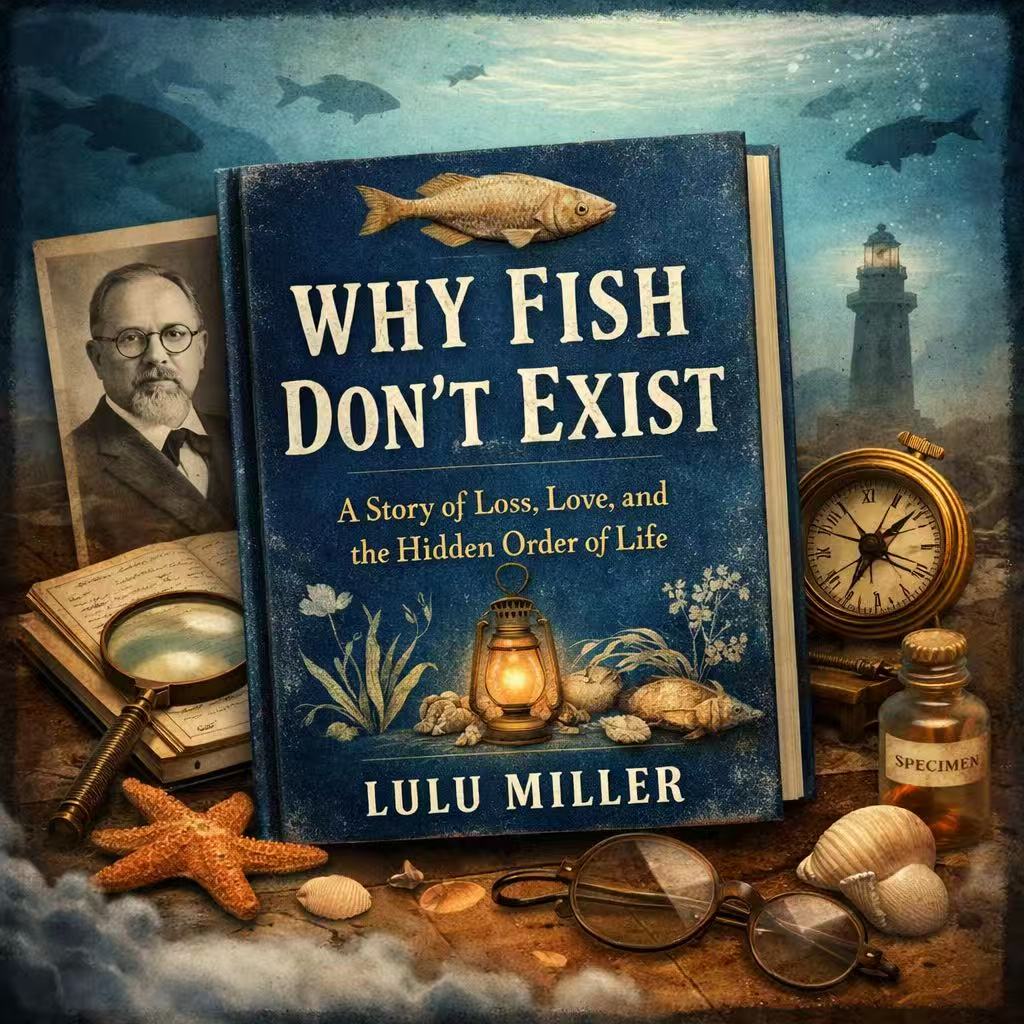
Why Fish Don’t Exist by Lulu Miller is a genre-blending book that combines biography, science writing, and personal memoir. It centers on the life of David Starr Jordan, a pioneering taxonomist who devoted himself to classifying fish and bringing order to the natural world.
The narrative follows Jordan’s relentless efforts to rebuild his collection after repeated disasters, portraying him as a man determined to impose structure on chaos. At the same time, Miller weaves in her own struggles with uncertainty and loss, using Jordan’s story as a lens to explore larger philosophical questions.
A key idea in the book is that “fish” does not exist as a scientifically valid category, challenging the assumption that the world can be neatly organized. This concept becomes a metaphor for the fragility of human-made systems and beliefs. As the story unfolds, Miller also confronts the darker aspects of Jordan’s legacy, particularly his connection to eugenics, which complicates his image as a purely admirable figure.
Ultimately, the book examines how people respond to disorder and meaninglessness. Rather than offering simple answers, it suggests that meaning is not found in rigid classifications, but created through curiosity, resilience, and human connection.
《鱼不存在》(Why Fish Don’t Exist)是Lulu Miller创作的一本融合了人物传记、科普写作和个人回忆的作品。全书围绕David Starr Jordan展开,他是一位致力于为鱼类分类、试图为自然世界建立秩序的科学家。
书中讲述了Jordan在多次灾难后仍不断重建自己鱼类标本收藏的经历,展现了他试图在混乱中建立结构与秩序的执着。同时,作者也穿插了自己在人生中面对不确定性与失落的体验,使整本书不仅是传记,更带有强烈的个人思考色彩。
本书的一个核心观点是:“鱼”在科学分类上并不是一个严格成立的类别,这一结论挑战了人们对世界可以被清晰划分的认知,也象征着许多人类建立的体系其实是脆弱甚至带有幻象的。随着叙述推进,作者还揭示了Jordan与优生学的关联,使这一人物形象变得更加复杂。
最终,这本书探讨的是人在混乱与无序面前如何回应。它并没有给出简单答案,而是指出:意义并不来自僵化的分类体系,而是源于人的好奇心、韧性以及人与人之间的连接。
1. pioneer /ˌpaɪəˈnɪə(r)/
中文:先驱;开拓者;开创
用法:可作名词或动词
搭配:pioneer in sth / pioneer a new method / a pioneer of science
例句:He is a pioneer in modern medicine.
他是现代医学的先驱。
⸻
2. portrait /ˈpɔːtreɪt/
中文:肖像;画像;描写
用法:名词
搭配:paint a portrait / a portrait of sb / literary portrait
例句:The artist painted a portrait of the queen.
这位画家为女王画了一幅肖像。
⸻
3. image /ˈɪmɪdʒ/
中文:形象;图像;印象
用法:名词
搭配:public image / create an image / mental image
例句:The company wants to improve its public image.
这家公司想改善其公众形象。
⸻
4. taxonomist /tækˈsɒnəmɪst/
中文:分类学家
用法:名词(生物学术语)
搭配:plant taxonomist / animal taxonomist / leading taxonomist
例句:The taxonomist studies how species are classified.
这位分类学家研究物种是如何被分类的。
⸻
5. fragility /frəˈdʒɪləti/
中文:脆弱;易碎;脆弱性
用法:名词
搭配:emotional fragility / fragility of life / structural fragility
例句:The glass shows the fragility of the material.
这块玻璃显示了这种材料的脆弱性。
⸻
6. confront /kənˈfrʌnt/
中文:面对;直面;对抗
用法:动词
搭配:confront a problem / confront reality / be confronted with
例句:We must confront the challenges ahead.
我们必须直面未来的挑战。
⸻
7. eugenics /juːˈdʒenɪks/
中文:优生学(有争议的学说)
用法:名词(不可数)
搭配:the theory of eugenics / support eugenics / eugenics movement
例句:Eugenics was widely criticized for its ethical problems.
优生学因其伦理问题而受到广泛批评。
⸻
