
Why Sweden is swapping screens for paper
Host: Now, Sweden is one of the most technologically advanced countries in the world. In its classrooms, laptops and tablets for every pupil have been the norm for almost a decade. But now schools are pivoting back to physical books, pens and paper.
This is a move that's attracting criticism from tech companies who say it could impact pupils' employment prospects and even damage the Nordic nation's economy. Maddy Savage reports now from Stikla, which is just outside Stockholm.
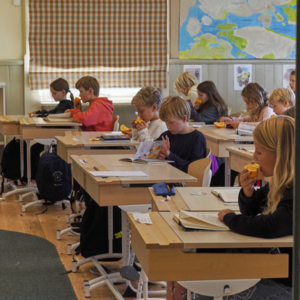
Maddy: In this former industrial suburb near Stockholm, high school pupils are unpacking laptops alongside things that weren't around as much a few years ago, physical books and printed coursework. Here's Alexis and Ludwig, who are 18 and in their final year.
Alexis: In some classes, for example mathematics, I've noticed we've used more books during the later years than computers.
Maddy: What about you?
Ludwig: For me, there's definitely been a big change. So basically my whole life I've been using tablets, computers, phones. When we have a pencil and a paper and a book, you need to do it all yourself.
Karina: My name is Karina Mikko. I teach English and Spanish. So, 15 years ago, the government said, use laptops. Now we're in the digital era in Sweden. Whereas now, we're going more towards the 60s again. It is more books, pens, papers.
Maddy: This U-turn in one of the world's most digital societies started here at Sweden's parliament. In 2023, a new right-wing coalition made this announcement.
Från skärm till pärm. It's a catchy rhyme in Swedish, and in English, it translates to from screen to binder. Ministers asked teachers to cut screen time for school pupils and reversed the requirement for preschools to use digital devices. Changes to the school curriculum are due in 2028, designed to support more textbook-based learning.
Joar: My name is Joar Forssell, and we're in the Swedish parliament, just outside the chamber.
Maddy: Joar is education spokesperson for the Liberal Party, which oversees Sweden's education ministry. He says the change is being driven by academic research about screens' potential to distract pupils, impact how they process information, and even affect brain development.
Joar: I think Sweden is usually early adopters. We think that's a competitive edge for Sweden. So I think we jumped on that train very, very fast. That was a mistake, but we're changing it back.
Maddy: Schools have been given extra money to buy textbooks and asked to employ librarians again. And mobile phones are set to be banned from all classrooms from this August.
The government hopes the approach can help reverse Sweden's tumbling test scores in the world's largest school survey, PISA, run by the OECD.
But the dramatic shift is attracting some criticism in this tech-savvy nation. Last year, 27 education and computer science academics wrote a newspaper column arguing that a strong digital curriculum is essential, even for primary school pupils.
Critics also argue the back-to-books policy is a distraction from other issues that could be impacting school results, like teacher training, the marketisation of some schools and rising inequality and segregation.
Back at the school in Sikla, teacher Karina says many of her pupils are more focused in lessons without laptops, but she's calling for more nuanced debates.
Karina: There's been so many rash decisions now and in the past where we either embrace digitalization or we exclude it completely and I don't believe in either.
词汇表
swap [swɒp] vt./vi. 交换,替换
laptop [ˈlæptɒp] n. 笔记本电脑
tablet [ˈtæblət] n. 平板电脑
pupil [ˈpjuːpl] n. 学生,(尤指)小学生
norm [nɔːm] n. 常态,标准,规范
pivot back to [ˈpɪvət] 重新转向,回归,回到
employment prospects [ˈprɒspekts] 就业前景
Nordic nation [ˈnɔːdɪk] 北欧国家
industrial suburb [ɪnˈdʌstriəl ˈsʌbɜːb] 工业郊区
unpack [ʌnˈpæk] vt. 打开(包裹),取出(物品)
printed coursework [ˈprɪntɪd ˈkɔːswɜːk] 打印的课程作业
U-turn [ˈjuː tɜːn] n. (政策等的)大逆转,180度转变
right-wing coalition [ˌraɪt ˈwɪŋ ˌkəʊəˈlɪʃn] 右翼联盟,右翼联合政府
catchy rhyme [ˈkætʃi raɪm] n. 朗朗上口的押韵(词句),好记的顺口溜
binder [ˈbaɪndə(r)] n. 活页夹,文件夹
chamber [ˈtʃeɪmbə(r)] n. 议事厅,会议厅
oversee [ˌəʊvəˈsiː] vt. 监管,监督,监察
early adopter(新科技等的)早期采用者
competitive edge 竞争优势
tumbling [ˈtʌmblɪŋ] adj. 持续下滑的,骤降的,暴跌的
PISA [ˈpiːsə] n. 国际学生评估项目(Programme for International Student Assessment)
tech-savvy [ˈtek sævi] adj. 精通科技的,懂科技的
marketisation [ˌmɑːkɪtaɪˈzeɪʃn] n. 市场化
segregation [ˌseɡrɪˈɡeɪʃn] n. 种族隔离;隔离,分离
nuanced [ˈnjuːɑːnst] adj. 细致的,微妙的
rash [ræʃ] adj. 草率的,鲁莽的
digitalization [ˌdɪdʒɪtəlaɪˈzeɪʃn] n. 数字化
exclude [ɪkˈskluːd] vt. 排斥,排除在外,拒绝
🌟翻译,pdf及更多文本内容见公众号【琐简英语】,回复"1"可加入【打卡交流群】
BBC News|“数字化”的瑞典为何回归“纸质化”教学?
4分钟 · 3766·
3766· 0
0
37660