
 35
35 0
0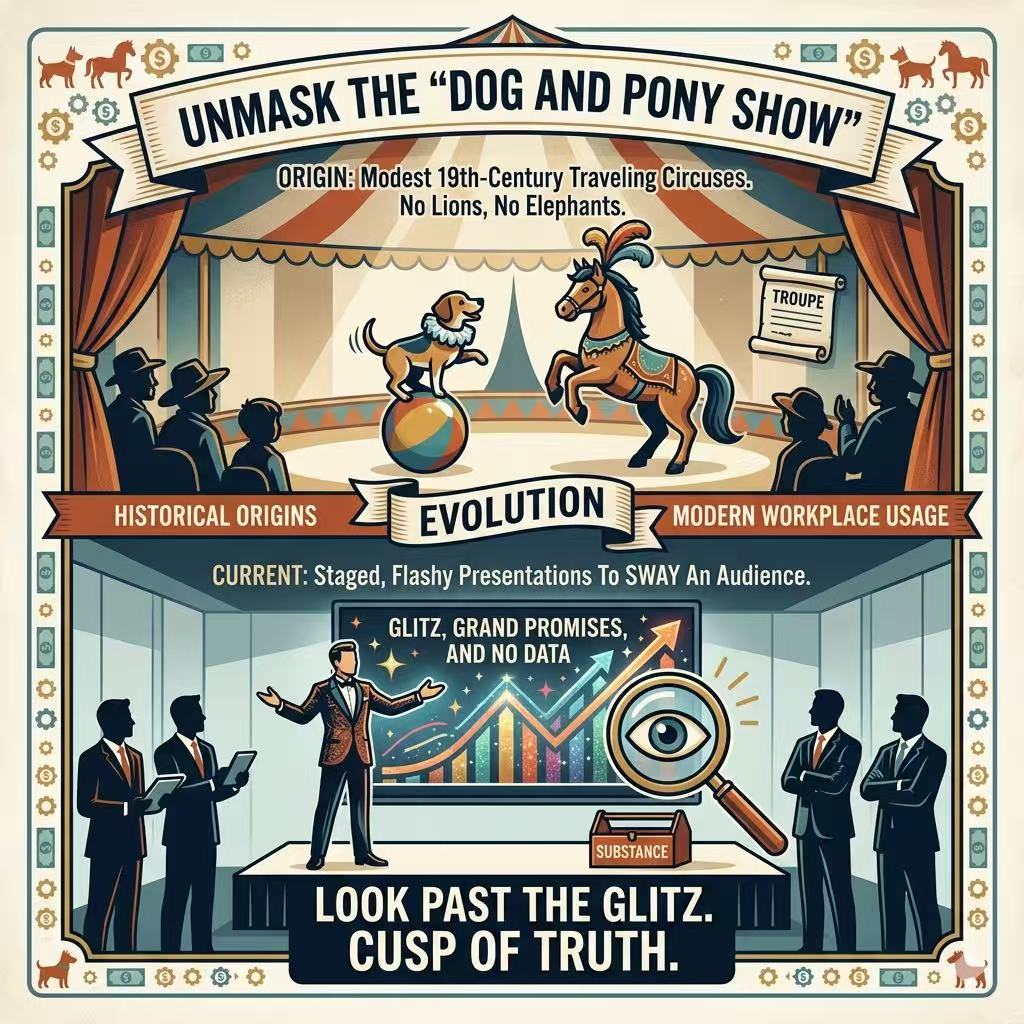
### The Evolution of the "Dog and Pony Show"
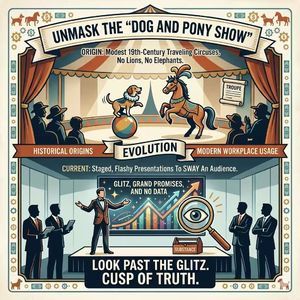
The idiom "dog and pony show" has its roots in late 19th and early 20th-century American culture. It originally referred to small, traveling circuses that lacked exotic animals like lions or elephants. Instead, these modest troupes relied on highly trained domestic animals—primarily dogs and ponies—to perform elaborate tricks to entertain rural audiences. While the performances were often charming, they were also seen as small-scale and somewhat over-rehearsed attempts to impress the public.
“dog and pony show” 这个习语起源于 19 世纪末 20 世纪初的美国文化。它最初是指那些没有狮子、大象等珍稀动物的小型巡回马戏团。相反,这些规模不大的表演团体依靠训练有素的家畜——主要是狗和小马——为乡村观众表演精心设计的把戏。虽然这些演出往往很迷人,但也被视为一种小规模的、为了博取好感而进行的过度排练的表演。
In modern usage, the phrase has evolved into a common workplace metaphor with a cynical or skeptical undertone. It now describes a highly staged, flashy presentation or marketing event designed to sway an audience, often while masking a lack of real substance. For instance, if a company delivers a presentation filled with beautiful slides and grand promises but no concrete data, a skeptical observer might dismiss it as just another "dog and pony show". It serves as a reminder to look past the surface-level glitz and focus on the actual value being offered.
在现代用法中,这个短语演变成了一个带有讽刺或怀疑意味的常见职场比喻。它现在用来形容一场为了说服观众而精心策划、华而不实的演示或营销活动,且往往掩盖了缺乏实质内容的事实。例如,如果一家公司的汇报充满了精美的幻灯片和宏大的承诺,却没有任何具体数据,怀疑者可能会将其嗤之以鼻,认为这不过是又一场 “虚张声势的表演”。它提醒人们要看穿表面的虚华,专注于所提供的实际价值。
### 1. 与“马戏团起源”相关的词汇
* Exotic [ɪɡˈzɒtɪk]
* 含义:异国情调的、奇特的、珍稀的。
* 在文中的语境:最初的 "dog and pony show" 指的是那些规模较小、没有狮子或大象等**珍稀动物 (exotic animals)** 的巡回马戏团。
* Troupe [truːp]
* 含义:(演员、歌手、马戏艺人的)表演团、剧团。
* 在文中的语境:文中指这些**规模不大的表演团体 (modest troupes)** 依靠训练有素的家畜来完成演出。
### 2. 与“现代职场喻义”相关的词汇
* Cynical [ˈsɪnɪkl] & Skeptical [ˈskeptɪkl]
* 含义:
* Cynical:愤世嫉俗的、冷嘲热讽的、认为人皆自私的。
* Skeptical:怀疑的、不信的。
* 在文中的语境:在现代用法中,这个短语演变成了一个带有**冷嘲热讽 (cynical)** 或**怀疑 (skeptical)** 语气的职场隐喻。如果一个观察者认为某个展示只是在作秀,他会以怀疑的态度 (skeptical observer) 对其不予理会。
* Sway [sweɪ]
* 含义:动摇、影响、说服。
* 在文中的语境:指那些华而不实的演示活动,其目的是为了**说服/动摇 (sway)** 观众,让他们接受某种观点或产品。
* Glitz [ɡlɪts] & Look past
* 含义:
* Glitz:炫目、浮华、华而不实。
* Look past:看穿、忽略表象去关注本质。
* 在文中的语境:文章提醒我们要**看穿 (look past)** 表面的**浮华 (glitz)**,去关注事物的核心实质。
