

 56
56 0
0Why every culture has a healing broth
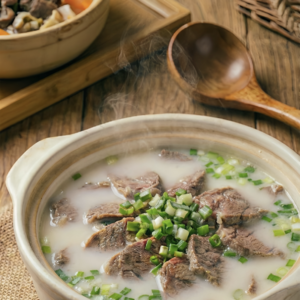
What do you eat when you need comfort? The answer varies depending on where you're from, but it's likely some form of broth, served steaming in a bowl.
In the US, it may be chicken noodle soup, while Italians might crave nonna's homemade pastina in brodo, tiny pasta in a simple vegetable or bone broth. Across Asia, it's congee and other rice porridges simmered slowly in water or stock, cooked by Chinese, Vietnamese, Korean and Indonesian mothers for their children.
Across continents, stocks and broths are woven into cultural and familial memory. They are what we reach for when we are ill, when we need to stretch ingredients or when we feel homesick. They rarely command attention on their own – yet they form the backbone of countless cuisines.
Feeding colds with steaming bowls of soup is no modern discovery. One of the earliest written references to broth appears in the Huangdi Neijing, a foundational Traditional Chinese Medicine work dating to the 2nd Century BC. Centuries later, many Chinese families worldwide still simmer bones with medicinal herbs such as goji berries and ginseng to produce nutrient-rich soups, served before or after dinner to help support overall health.
While stocks and broths are often associated with illness, they also anchor moments of celebration. In Emilia-Romagna, preparing and eating tortellini in brodo is a Christmas tradition. In China, double-boiled soups are one of the most opulent courses in a banquet meal. In Japan, the new year is not complete without o-zōni. Whether simmered for survival, wellness or celebration, there's one thing most cooks and home cooks would agree on: it's that in kitchens everywhere, someone is still tending the pot.
生词好句
healing 英 ['hiːlɪŋ] 美 [ˈhiːlɪŋ] adj. 疗愈的,慰藉的
broth 英 [brɒθ] 美 [brɔːθ] n. 汤
brodo n. 肉汤
dashi n. 出汁
vary 英 [ˈveəri] 美 [ˈveri] v. 变化、不同、有差异
variety n. 多样性
Opinions vary on this issue.在这个问题上,意见各不相同。
Symptoms vary depending on the individual. 症状因人而异。
Each department's priorities vary depending on their yearly targets, but we likely share one common need — protecting customer experience above all else.每个部门的优先级根据各自的年度目标有所不同,但我们很可能有一个共同的需求,那就是要把客户体验放在第一位。
crave 英 [kreɪv] 美 [kreɪv] v. 渴望,尤指对食物的渴望
I'm craving a hotpot today. 我今天太想吃一顿火锅了。
craving n. 渴望
I have a craving for chocolate.我就是个巧克力脑袋。
nonna 英 [ˈnɒnə] 美 [ˈnɑːnə] n. 奶奶(意大利语)
nonna's recipe 奶奶的食谱
congee 英 [ˈkɒndʒi] 美 [ˈkɑːndʒi] n. 中式粥(大米熬到软烂开花的浓稠粥)
porridge 英 [ˈpɒrɪdʒ] 美 [ˈpɔːrɪdʒ] n. 谷物加液体煮软的粥
oatmeal porridge 牛奶燕麦粥
simmer 英 [ˈsɪmə] 美 [ˈsɪmər] v. 用小火炖,文火慢炖
Let the soup simmer for two hours.这锅汤需要文火慢炖两小时。
boil v. 用大火煮开
stock 英 [stɒk] 美 [stɑːk] n.(本文)高汤
stock(高汤)通常仅以骨头长时间熬制而成,非常浓稠,多作为后续烹饪的基础原料,一般不直接饮用。
broth则是在烹煮过程中,加入调料及部分食材所得到的清澈液体。尽管炖煮时会放入肉类或蔬菜等原料,但最终使用的是滤去固体后的汤液本身,因此可称为"清汤"。其既可直接饮用,也可作为其他菜肴的基础。
soup指完成状态的成品汤品,通常会加入多种食材,如肉类、蔬菜、面食或馄饨等,内容丰富,可直接作为一道菜食用。
be woven into... 把……编织进、纺织进……
The bedtime story-reading was woven into my childhood, creating a sense of safety that I still carry today.每晚睡前讲故事的习惯被编织进了我的童年,创造了一种安全感,至今仍陪伴着我。
Serving tea to guests is a tradition that has been deeply woven into Chinese culture and our daily life. 为客人奉茶的习惯被深深地编织进了中国文化和我们的日常生活之中。
stretch 英 [stretʃ] 美 [stretʃ] v. 拉长;省着用
During the war, my granny had to stretch ingredients. 战争期间,我奶奶不得不省着用食材。
I forgot to go grocery shopping, so I’m stretching the last two eggs into a big plate of scrambled eggs with lot of tomatoes. 我忘了去买菜,所以只能把最后两个鸡蛋省着用,加很多西红柿做成一大盘西红柿炒鸡蛋。
We stretched our travel budget by staying in hostels. 我们这次旅行,一路都住青年旅舍,省着花钱。
I stretched my time by skipping lunch to finish the report. 我靠不吃午饭来挤出时间,把报告赶完了。
feed colds with... 以.....撑过感冒
feed a cold, starve a fever (英文俗语)感冒时要吃东西,发烧时要饿着
She fed the flu with lemon water. 她喝柠檬水撑过了流感。
