

 133
133 3
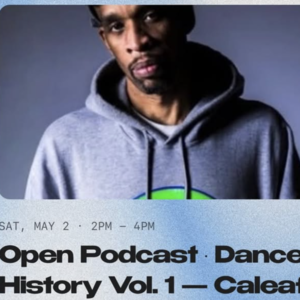
3In this episode of Dance Chat, we sit down with Caleaf Sellers — Brooklyn-born dancer, original member of Mop Top Crew, member of Dance Fusion, co-founder of 36 Chambaz of Stylez with Buddha Stretch, and one of the directors of Mop Top University.
Caleaf takes us back to the Brooklyn parks, block parties, and club spaces where dance was not yet a formal “career path,” but a way of gathering, celebrating, learning, and surviving. From dancing with his mother at home to plugging sound systems into his apartment window for neighborhood jams, his story traces the roots of Hip Hop and House through lived experience.
We talk about how dancers learned before classes and social media, why originality mattered, and how “biting” was understood in the culture. Caleaf also shares how a night at The Tunnel led to being scouted by Rosie Perez for a Diana Ross music video, opening the door to touring, music videos, and working in the entertainment industry.
A major part of the conversation focuses on 36 Chambaz of Stylez — why it was created in New York, how its structure was inspired by The 36th Chamber of Shaolin, and why foundation, technique, partner dancing, freestyle, cypher energy, and cultural context are central to the way Caleaf teaches.
Throughout the episode, Caleaf reflects on what has changed in dance culture: the shift from parties to contests, the loss of social connection, the importance of giving energy in a cypher, and the responsibility dancers have to pass knowledge forward with respect.
In this episode, we discuss:
Growing up in Brooklyn before Hip Hop had a name
How Caleaf’s mother became his first dance teacher
Park jams, block parties, and dance as community celebration
Learning by watching before formal street dance classes existed
The importance of originality and not “biting” someone’s style
The Tunnel, Rosie Perez, and Caleaf’s first industry opportunities
Dancing in Diana Ross’s “Working Overtime” music video
Touring with Crystal Waters and performing through freestyle
The difference between dancing behind an artist and dancing for yourself
The creation of 36 Chambaz of Stylez with Buddha Stretch
Why dancers must start from foundation before chasing difficulty
The role of partner dancing, cyphers, and social exchange
Why freestyle begins with music, feeling, and letting go of self-judgment
How dancers can find individuality through variation and personal interpretation
What it means to contribute to the culture instead of only taking from it
The realities of organizing dance events and building a home base in New York
Leaving dance, returning with purpose, and creating your own opportunities
The importance of care, health, longevity, and dancing through age
Why dance, music, and culture continue to connect people across borders
Follow 🔗
Caleaf: ins@caleafsellers
36ChambazofStylz: ins@36chambazofstylz
36ChambazofStylz Summer Camp: registration
Host: ins@ruijingshu rednote @theTryGirl
Podcast: apple podcast 小宇宙