


 1054
1054 10
10
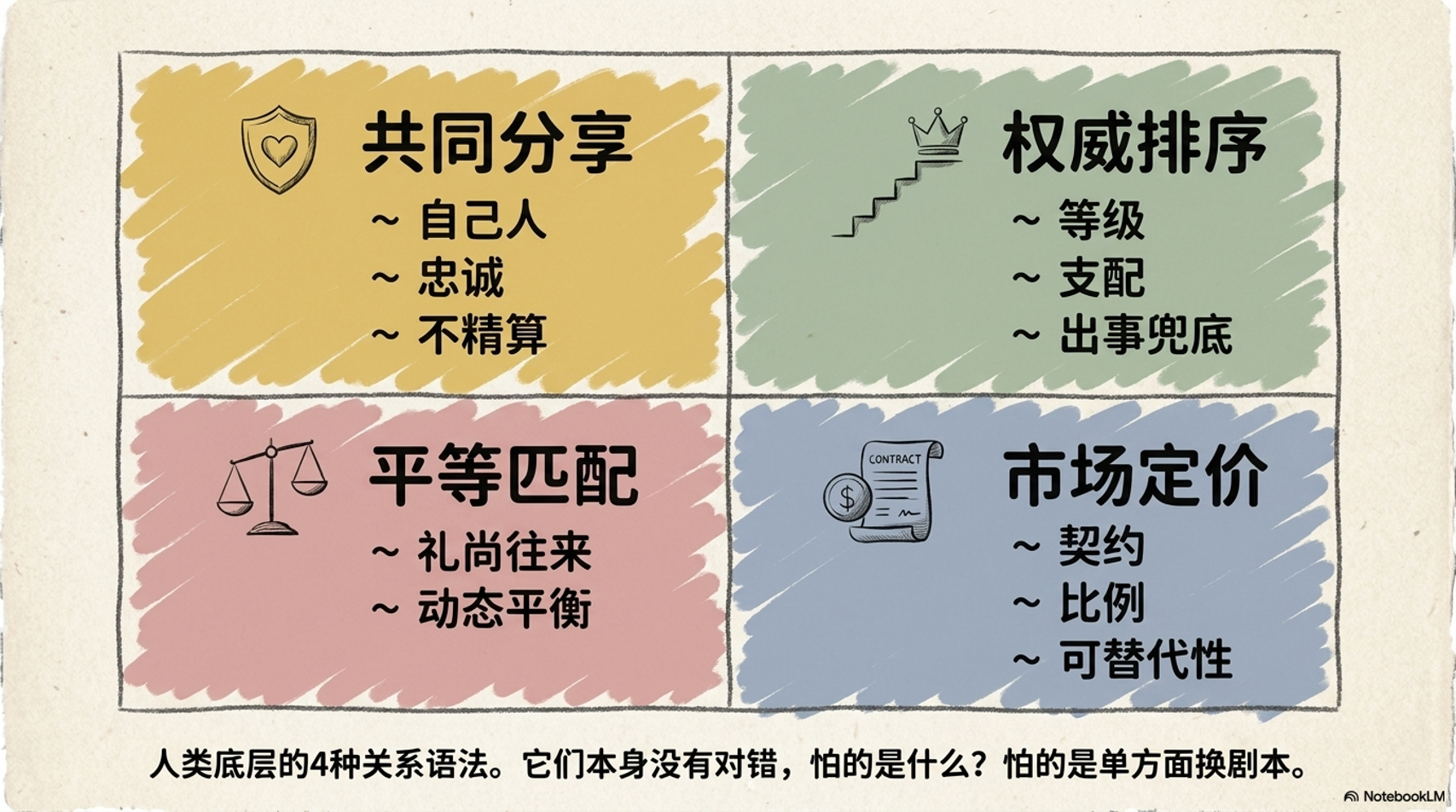
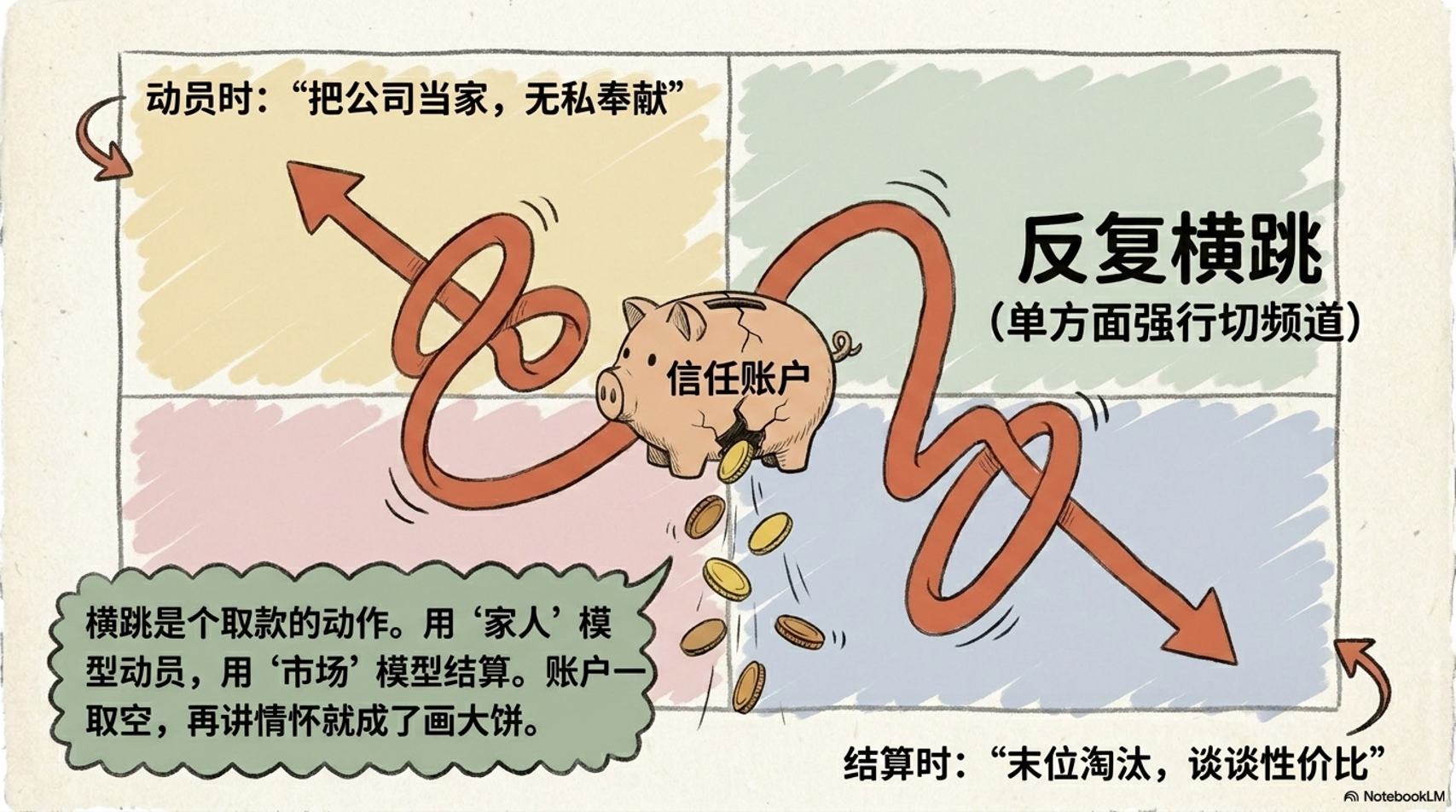
团建还在喊兄弟,绩效面谈却像在谈生意——这种「变味」,未必只是老板虚伪,也未必只是你不努力。本期从人类学家 Alan Fiske 的四种底层关系语法出发:共同分享、权威排序、平等匹配、市场定价,解释人和人之间最常见的痛苦来源之一:横跳——同一件事上,动员用一种语法,结算换一种,而且常常单方面换频道、没跟你对齐。
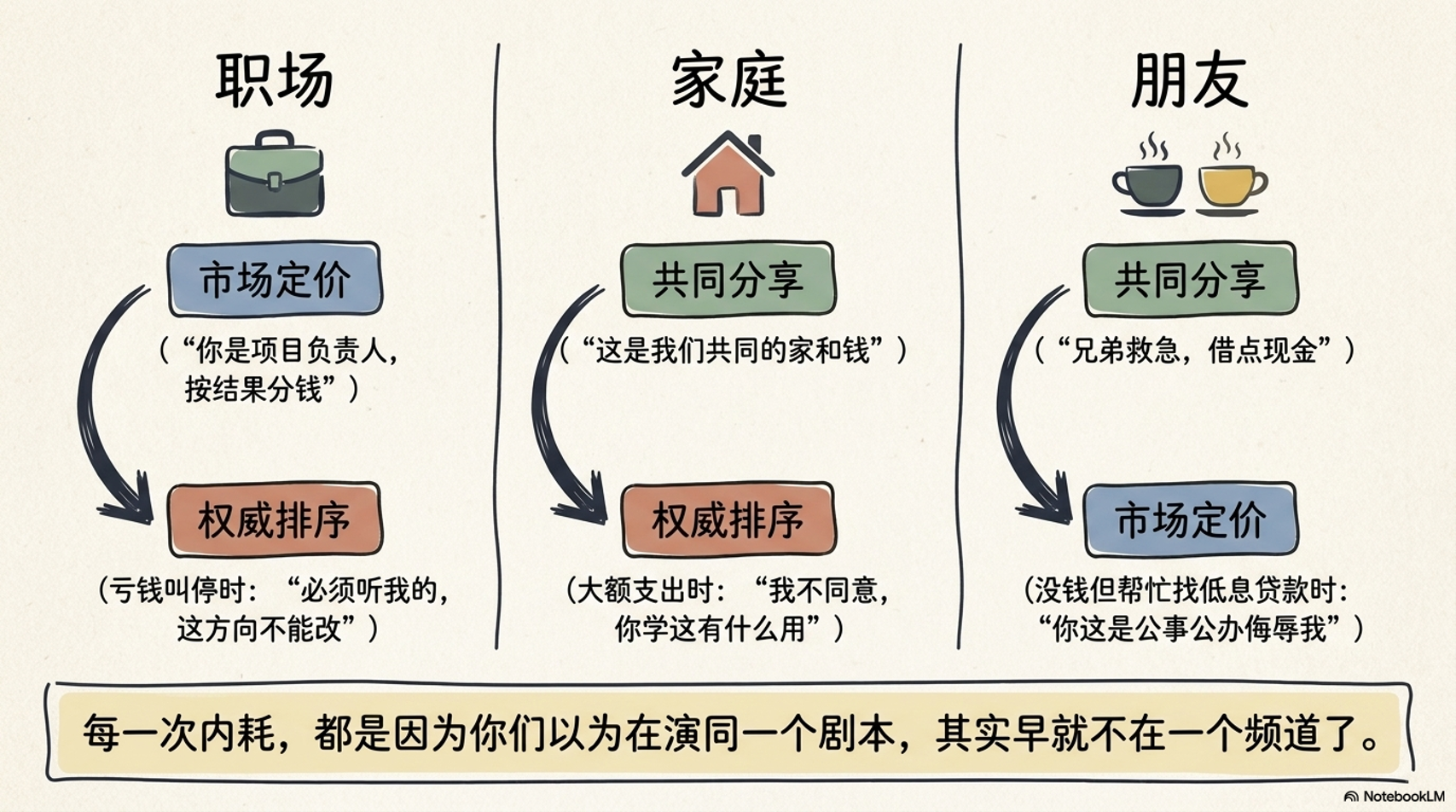
我们会拆开标题里的职场画面,看三种典型横跳(家人→KPI、程序正义↔人情世故、投资人↔老板),再带到租房、伴侣管钱、朋友借钱等离开工牌也逃不掉的场景。本期尤其说给带团队的管理者:反复横跳会一点点透支员工的信任与耐性;也会给打工人的三步辨识法,以及一个可以随身用的 「四宫格」工具。
时间轴 - 标题与钩子;下属 vs 老板两种视角;本期要回答的不是「谁更虚伪」
- 四种关系语法前置:Fiske 四模型名称与白话释义;横跳定义;本期结构预告
- 嵌套 vs 横跳;管理者视角:少制造横跳才能留住信任
- 开场延展:横跳不限于工牌(租房、朋友借钱、家里管钱)
- 误解诊断:大家庭话术 → KPI/优化;三种常见误读(虚伪 / 自责 / 认命)
- 个人经历(美妆行业);动员 共同分享 vs 结算 市场定价;Rousseau 心理契约
- 四模型讲透;嵌套正常、横跳才伤人;三类常见横跳
- 禁忌权衡(口头提及)
- 职场 报销双标:有力 权威排序 / 无力 平等匹配;Leventhal 程序正义
- 老周/投资人:平时 市场定价、关键节点 权威排序;模型不匹配
- 三种横跳叠加 → 倦怠
- 家庭:共同分享 → 关键支出 权威排序;Kirchler
- 朋友借钱(主播经历):共同分享 vs 市场定价;双方互感横跳
- 管理者五条自检;信任像账户、横跳是取款
- 打工人三步:命名 → 对齐 → 边界
- 收尾:四宫格工具;李佳琦案例;评论区邀请
📚 参考文献与学术注脚
Angulo, A. N., Goldstein, N. J., & Norton, M. I. (2025). Friendship fallout and bailout backlash: The psychology of borrowing and lending. Journal of Consumer Psychology, 35(1), 3–21. doi.org
Clark, M. S., & Mills, J. (1979). Interpersonal attraction in exchange and communal relationships. Journal of Personality and Social Psychology, 37(1), 12–24. doi.org
Clark, M. S., & Mills, J. (2012). A theory of communal (and exchange) relationships. In P. A. M. Van Lange, A. W. Kruglanski, & E. T. Higgins (Eds.), Handbook of theories of social psychology (Vol. 2, pp. 232–251). Sage. doi.org
Doden, W., Grote, G., & Rigotti, T. (2018). Does leader–member exchange buffer or intensify detrimental reactions to psychological contract breach? The role of employees' career orientation. Journal of Vocational Behavior, 106, 192–208. doi.org
Farh, J.-L., & Cheng, B.-S. (2000). A cultural analysis of paternalistic leadership in Chinese organizations. In J. T. Li, A. S. Tsui, & E. Weldon (Eds.), Management and organizations in the Chinese context (pp. 84–127). Palgrave Macmillan. doi.org
Fiske, A. P. (1991). Structures of social life: A four-element model of morally constituted relationships. Free Press.
Fiske, A. P. (1992). The four elementary forms of sociality: Framework for a unified theory of social relations. Psychological Review, 99(4), 689–723. doi.org
Fiske, A. P., & Tetlock, P. E. (1997). Taboo trade-offs: Reactions to transactions that transgress the spheres of justice. Political Psychology, 18(2), 255–297. doi.org
Giessner, S. R., & van Quaquebeke, N. (2010). Using a relational models perspective to understand normatively appropriate conduct in ethical leadership. Journal of Business Ethics, 95(1), 43–55. doi.org
Khullar, T. H., Kirmayer, M. H., & Dirks, M. A. (2021). Relationship dissolution in the friendships of emerging adults: How, when, and why? Journal of Social and Personal Relationships, 39(1), 217–241. doi.org
Kirchler, E., Rodler, C., Hölzl, E., & Meier, K. (2001). Conflict and decision-making in close relationships: Love, money, and daily routines. Psychology Press.
Körner, R., & Schütz, A. (2021). Power in romantic relationships: How positional and experienced power are associated with relationship quality. Journal of Social and Personal Relationships, 38(9), 2653–2677. doi.org
Leventhal, G. S. (1980). What should be done with equity theory? New approaches to the study of fairness in social relationships. In K. J. Gergen, M. S. Greenberg, & R. H. Willis (Eds.), Social exchange: Advances in theory and research (pp. 27–55). Plenum Press.
McGraw, A. P., & Tetlock, P. E. (2005). Taboo trade-offs, relational framing, and the acceptability of exchanges. Journal of Consumer Psychology, 15(1), 2–17. doi.org
Restubog, S. L. D., & Bordia, P. (2006). Workplace familism and psychological contract breach in the Philippines. Applied Psychology: An International Review, 55(4), 563–585. doi.org
Restubog, S. L. D., Bordia, P., Tang, R. L., & Krebs, S. (2010). Investigating the moderating effects of LMX in the psychological contract breach–employee performance relationship: A test of two competing perspectives. British Journal of Management, 21(2), 422–437. doi.org
Rousseau, D. M. (1989). Psychological and implied contracts in organizations. Employee Responsibilities and Rights Journal, 2(2), 121–139. doi.org
Rousseau, D. M. (1995). Psychological contracts in organizations: Understanding written and unwritten agreements. Sage.
Vogler, C., Lyonette, C., & Wiggins, R. D. (2008). Money, power and spending decisions in intimate relationships. The Sociological Review, 56(1), 117–143. doi.org
Williams, K. D. (2007). Ostracism. Annual Review of Psychology, 58, 425–452. doi.org


本期主播| 1号
1号:企业培训师,高管教练,ICF ACC教练;前麦肯锡项目经理,500强总监;播客厂牌《良好生活》联合发起人
你还可以在这里找到我们:
相关信息:
如果你想探讨教练相关话题,请查看此文:如果你想找个教练聊聊
_________________________________________________________________
「101号谈职场」,从职场小白到职场中层都在听的泛职场播客,焦职场沟通,关注职场人的打工体验
两位90后主播和他们的朋友们,致力于挖掘职场打工人的个人成长,行业亲历和有趣故事,和你一起吐槽老板,八卦行业;也和你一起努力拼搏,憧憬未来。
但我们始终坚信,“职场只是生活的一部分”,我们祝愿你有一个成功的职业生涯,但我们更希望你有一个快乐的人生
10:扎根于是市场营销的快消原住民,辗转于联合利华,欧莱雅,拜尔斯道夫、汉高等企业,一个阳光乐观的市场人
1号:辗转快消、体育、互联网、咨询的MBB咨询项目经理,个人成长教练,国家二级心理咨询师,Tedx演讲教练,培训师
如果你喜欢我们的节目,欢迎到小宇宙,苹果podcast,spotify,网易云音乐,喜马拉雅,QQ音乐订阅我们的播客,也欢迎添加e0ehao的微信,加入我们的听友群。