

 933
933 32
32⚠️ 本期开头涉及性别暴力与虐待动物的讨论,请酌情收听。
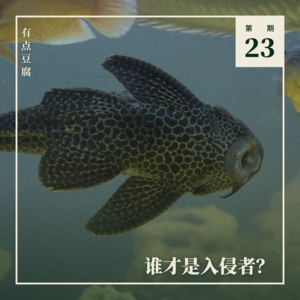
为什么一个动物一旦被叫作「入侵物种」,牠的痛苦就好像突然不重要了?
本期《有点豆腐》从最近溢出海外的「虐杀清道夫」争议说起,聊聊一个在生态保护、网络流量和动物伦理之间不断滑动的问题:我们如何从「保护生态」走向了「观看虐杀」?又是如何把被人类带来、交易、放生、遗弃的动物,重新命名为需要被清除的敌人?节目从概念开始,试图解释「本土」、「外来」认知背后的二分法和具身体验。看似只是科学分类的词汇,却很容易进入一种战争化的叙事:外来物种变成入侵者,本土生态变成有边界的容器,人类成了替自然清剿敌人的守卫者。但真实的生态关系远比这个故事复杂。
物种的移动往往离不开贸易、养殖、消费、运输和市场,而所谓「入侵」的后果,也常常是人类制造出来的关系网络的一部分。这一期也会追问政治经济中的双重标准:为什么有些外来生命被包装成产业和美食,有些却被丢弃、猎奇和折磨?为什么当动物还有经济价值时,牠们是「良种」;一旦失去价值,就变成害兽和暴力奇观?最后,我们会进入最困难的伦理问题:当外来动物确实伤害本土动物时,我们如何在不同有感生命之间做选择?保护生态是否必然意味着杀戮?如果不得不干预,底线又在哪里?
这期节目不是打算全盘否定「入侵物种治理」,而是一次对治理语言、生态想象和暴力正当性的追问。我们需要保护生态和脆弱的生命,但也需要警惕:别让「保护」变成一种更体面的残忍。
时间轴
开场:跨物种与性别化的暴力
虐杀清道夫的视频溢出海外
积极新闻:玉林狗肉馆关停
为什么聊入侵物种
入侵物种是怎么定义的
「外来」与价值判断
流浪猫研究争议
入侵思维从何而来:意象图式
繁殖体压力 vs 生物抗性
十分之一规则与新生态系统(novel ecosystem)
政治经济:从西方引入的猪和鸡
从小龙虾到两栖动物的病原体迁移
伦理张力:整体主义 vs 个体主义
三个动物伦理框架对入侵物种的讨论
伦理共识:源头预防与非致命优先
同理心保育(Compassionate Conservation)与野生动物福祉评估
扑杀的伦理底线
殖民主义纯洁性的语法
自然的麦当劳化
酷儿生态学
下期预告
参考文献
入侵物种的定义、科学与认知框架
Convention on Biological Diversity. (2002). Decision VI/23: Alien species that threaten ecosystems, habitats or species. Secretariat of the Convention on Biological Diversity.
Davis, M. A., Chew, M. K., Hobbs, R. J., Lugo, A. E., Ewel, J. J., Vermeij, G. J., … Briggs, J. C. (2011). Don't judge species on their origins. Nature, 474(7350), 153–154. doi.org
IPBES. (2023). Thematic assessment report on invasive alien species and their control (H. E. Roy et al., Eds.). IPBES secretariat.
Larson, B. M. H. (2011). Embodied realism and invasive species. In K. deLaplante, B. Brown, & K. A. Peacock (Eds.), Philosophy of ecology (Handbook of the Philosophy of Science, Vol. 11, pp. 219–235). Elsevier/North-Holland.
Li, Y., Wan, Y., Shen, H., Loss, S. R., Marra, P. P., & Li, Z. (2021). Estimates of wildlife killed by free-ranging cats in China. Biological Conservation, 253, Article 108929. doi.org
Reo, N. J., & Ogden, L. A. (2018). Anishnaabe Aki: An indigenous perspective on the global threat of invasive species. Sustainability Science, 13(5), 1443–1452. doi.org
Simberloff, D., et al. (2011). Non-natives: 141 scientists object. Nature, 475(7354), 36. doi.org
Zhang, Z., Qi, H., & Guo, P. (2021). Doubtful estimates of wildlife killed by free-ranging cats in China. Biological Conservation, 253.
动物伦理:个体 / 整体、权利、关系
Harrington, L. A., Moehrenschlager, A., Gelling, M., Atkinson, R. P. D., Hughes, J., & Macdonald, D. W. (2013). Conflicting and complementary ethics of animal welfare considerations in reintroductions. Conservation Biology, 27(3), 486–500. doi.org
Korsgaard, C. M. (2018). Fellow creatures: Our obligations to the other animals. Oxford University Press.
Regan, T. (2004). The case for animal rights (2nd ed.). University of California Press. (原作出版于 1983 年)
同理心保育与动物福祉
Coghlan, S., & Cardilini, A. P. A. (2022). A critical review of the compassionate conservation debate. Conservation Biology, 36(1), Article e13760. doi.org
Evans, T. R., … Mendl, M. (2026). Quantifying and categorising the animal welfare impacts caused by biological invasions [AWICIS]. Nature Communications. doi.org
Hayward, M. W., Callen, A., Allen, B. L., … Wüster, W. (2019). Deconstructing compassionate conservation. Conservation Biology, 33(4), 760–768. doi.org
Ramp, D., & Bekoff, M. (2015). Compassion as a practical and evolved ethic for conservation. BioScience, 65(3), 323–327. doi.org
Wallach, A. D., Bekoff, M., Batavia, C., Nelson, M. P., & Ramp, D. (2018). Summoning compassion to address the challenges of conservation. Conservation Biology, 32(6), 1255–1265. doi.org
Wallach, A. D., Batavia, C., Bekoff, M., … Ramp, D. (2020). Recognizing animal personhood in compassionate conservation. Conservation Biology, 34(5), 1097–1106. doi.org
纯洁性、殖民、酷儿生态学与科学论
Hettinger, N. (2001). Exotic species, naturalization, and biological nativism. Environmental Values, 10(2), 193–224.
Latour, B., & Woolgar, S. (1986). Laboratory life: The construction of scientific facts (2nd ed.). Princeton University Press.
Simha, A., & Subramaniam, B. (2026). Boundary violations and extinction phobias: Trans studies meets invasion science. Area, 58(1), Article e70046. doi.org