青甘环线(下):敦煌、信仰,以及历史为什么会让人流泪尬聊英语 Gossip English

青甘环线(下):敦煌、信仰,以及历史为什么会让人流泪

89分钟 ·
播放数590
·
评论数29

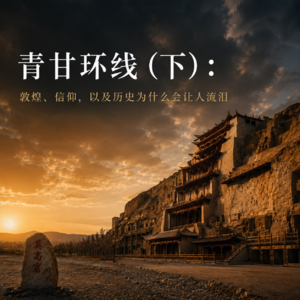
这一期,我们终于来到青甘环线的最动人一站——敦煌。

原本以为,这只会是一期聊莫高窟、丝绸之路和敦煌文化的节目。
结果却一路聊到了信仰、文明、历史,甚至聊到:为什么我们总喜欢站在今天,去审判过去的人。
从公路边一路五体投地朝圣的人,到跨越两千年的莫高窟;从王圆箓发现藏经洞,到《又见敦煌》里那一句「我真的不知道它们这么重要」。
历史第一次不再只是课本上的年代,而像是真正活着的人,在跨越时间和我们对话。

这一期,我们聊的不只是敦煌。
也是关于信仰、文明、历史重量,以及为什么真正震撼人的,从来不是风景,而是人。

02:03 🙏 在青甘公路上,看见有人一路五体投地朝圣,那一刻为什么如此震撼?
06:32 🧭 信仰一定是宗教吗?科学、理性、自由,会不会也是一种信仰?
08:44 ❓ 不可知论(Agnostic)到底是什么?为什么我们宁愿保留一个问号?
18:52 ❤️ 当人真正无助的时候,祈祷到底是在寻找神,还是寻找面对现实的力量?
22:47 🏜️ 第一次走进莫高窟,为什么感觉不像景点,而像走进一层层文明?
30:31 🎨 为什么唐代雕塑一眼就能看出来?艺术其实也是国力的缩影。
39:54 📜 王圆箓发现藏经洞后,为什么会成为历史上最具争议的人物之一?
48:58 ⏳ 我们为什么总喜欢站在今天,去批评过去的人?
50:05 🎭 《又见敦煌》为什么让人从第一幕开始就忍不住流泪?
56:21 🌌 一粒沙,为什么能够让人感受到历史真正的重量?
60:42 ❤️ 当历史人物开始向后人"道歉",为什么反而更让人共情?
68:24 🏛️ 敦煌真正迷人的地方,不只是莫高窟,而是两千年的历史同时存在于一个地方。
70:45 👽 公路边突然出现"外星人遗址"路牌,到底是真有其事,还是另一种未解之谜?
76:56 📚 节目后半段照例进入雅思口语时间:如何描述一个让你印象深刻的历史遗址。


所以这一期,不只是聊敦煌。
也是一次关于信仰、文明、历史、遗产,以及我们该如何理解过去的人的闲聊。
历史也许从来不是一串年代,而是一场跨越千年的对话。

展开Show Notes
Yao0411
Yao0411
2026.8.17
置顶
【转录1/26】【0:00-02:27】
Hi everyone, it's Gossip English time. 尬聊英语时间又到啦! This is Wing. And I am Yao. Let's learn English through gossip.
Hey Yao, how is it going?
Good, as usual.
How about you?
Busy, really busy. We are supposed to record this episode with the last episode together, and then we just couldn't figure out the time, so we recorded a few days later. It's also about my trip in Qinghai Gansu.
Yeah, and it's another very fantastic episode, I'm pretty sure.
Yeah.
So what are we gonna talk about in this episode?
Well, in last episode, we talked a lot about my firsts, and I think that episode was really about what the trip did to my body and my rhythm, learning how to drive through a place that doesn't revolve around you. And this episode, I want to talk about something more cultural.
So what is it about? Because usually when I heard people traveling to the north west, usually they would talk a lot about the scenery. So that's very interesting that you have something about cultural.
Well, we spent a whole episode talking about the scenery, right? I think it's pretty enough.
Yeah.
One of the famous locations during this trip, of course, is Dunhuang. And when it comes to Dunhuang, it's very easy to think about 莫高窟 Mo Gao Caves, of course. So that is the main cultural part of it.
Yeah, of course, I'm always looking forward to visiting Mo Gao Caves because the culture there just very fascinates me and I'm just very curious about it.
Well, before we start to talk about that, I want to mention something else first.
So what happened?
It was a moment before I arrived in Dunhuang, I saw someone worshiping on the road, like doing that full body prostrations over and over again, all along the way to some temples.
You mean just like what they did in Tibet?
Yes, it's very similar.
Yao0411
Yao0411
2026.8.17
【转录26/26】【1:26:13-1:29:07】
OK and any other questions?
Yes in part 3, the first one is, do you think tourism helps or harms historic places?
Well, I think tourism can both help and harm historic places. On one hand, it brings funding and public attention, which can support preservation. On the other hand, if it is poorly managed, it can damage fragile sites and lead to over-commercialization. So in my view, tourism itself is not the problem. The key issue is management.
Any other questions?
Yeah, the second question is, what is the difference between visiting a historic place in person and learning about it from books or videos?
What do you think?
Well, the main difference is that books and videos help you understand a historic place, while visiting in person helps you feel it. When you are physically there, you can sense the scale, atmosphere, and even the fragility of the site. So I think the richest experience comes when both are combined.
Wow. That's all for today. Thank you for your listening.现在是我们的翻牌时间.好,我先来翻一下
我们的来来_IHBD,姐姐催更,还有Asther113,然后她也说期待下一期。每一次我们刚发完一期,然后就会有很多小伙伴就马上催更下一期,压力山大,但我们也是在努力中。对,我们一直都在努力中,实在太忙了。然后我想挑的一个评论,也是来自于来来_LHVD。她说 宝藏也是让我淘到了。好高兴你找到我们,我也好高兴你继续听我们的播客,谢谢你,谢谢你的支持。还有记得一键三连,点赞转发还有收藏。也可以在五大平台里面收听我们的播客,包括有小宇宙、喜马拉雅、苹果播客、QQ音乐、还有Spotify。也欢迎大家在我们各大平台下面进行留言,当然如果你想有更亲密、更私密的交流的话,也可以发邮件到我们的邮箱,我们的邮箱是gossipenglish@hotmail.com。OK, have a nice weekend guy! Have a nice day! bye!
Yao0411
Yao0411
2026.8.17
【转录25/26】【1:22:22-1:26:13】
还有下一个是 the traces of shifting dynasties, changing values and broader cultural exchange,这个的话就是给我们加分的一个短语,Shifting dynasty就是表示政治层面上面的时代的变迁,Changing values就表示思想层面上面的价值的改变,还有Broader cultural exchange就是一个交流层面的更加广的一个文化交流。那还有最后一个是Repository of memory,Repository它是一个很好用的一个高阶名词,表示储藏式,储存某个地方,那我们在这里是表示它是一个记忆的一个储藏室。A repository of memory。
I was particularly moved because it was my first time visiting, and I had not expected it to affect me so profoundly. After the trip, I found myself reading books and watching documentaries about the caves, which is usually a sign that a place has genuinely taken hold of my imagination. The more I learned, the more I realized that Mogao is not only about preservation or ancient paintings. It also raises much larger questions about how history survives, how fragile cultural inheritance can be, and how later generations interpret — or misinterpret — the people who tried to protect it.
OK,那在这里的话有一个profoundly,之前已经讲过很多次这个profoundly很好用了。因为它是表示深刻的,就平替了什么deeply或是之类的,所以affect me so profoundly就是如此深地影响了我。下一个是take hold of my imagination,这个take hold of它是表示抓住了意思,那抓住了我的想象力、占据了我的脑子,就是让我一直想着他的意思。下一个interpret,还有那个misinterpret,那他们刚好是一个反义词,因为mis是一个否定的前缀嘛,所以interpret,它表示理解,那misinterpret就是被误读的意思。
So I would say the place impressed me on two levels. On the surface, it is undeniably breathtaking. But on a deeper level, it made history feel immediate, vulnerable, and profoundly human. And I think that is why it left such a lasting impression on me.
OK,那在这里最后一段的话,我们做一个升华。On two levels就是从两个层面来讲。那运用了一个很好,就是on the surface表层来讲,on the deeper level就是深层来讲。下一个的话,我们形容风景的时候很喜欢用这个breathtaking,就表示说令人窒息,其实就是说非常惊艳的意思了。那他在前面用了一个undeniably,就是不可否认的。那所以就是加深了这个 breathtaking,就是他的美是毋庸置疑的。还有下一个是immediate vulnerable and profoundly human,immediate表示不再遥远,其实就是表示非常近,直接贴近你。那vulnerable是表示非常脆弱、非常易损。and profoundly human,就是这个human的话,它现在就做一个形容词 ,就表示非常人性化、极其人性的。还有最后一个就是当我们想说某个事情给我们留下了非常深刻的印象的话,可以用这个leave such a lasting impression on me。那这个就会非常非常好用,然后最后做一个升华。
Yao0411
Yao0411
2026.8.17
【转录24/26】【1:18:25-1:22:14】
It is a vast complex of caves, filled with Buddhist murals and sculptures, created over many centuries. So when you visit it, you are not encountering one frozen moment in the past. Instead, you are confronted with a site that has accumulated layers of faith, labour, artistry, and historical change over an extraordinary stretch of time.
OK。那在这里的话,有一个单词非常非常好用,就是在我们雅思当中,叫remarkable。 那remarkable的话,它表示非常非凡的,那它就可以代替了很多什么good啊,或者是其他的一些词。所以我们可以说 a remarkable place or what made this site so remarkable。那另外一个是
you are not encountering one frozen moment in the past,那在这里的话,这个encounter就表示偶遇、遇到的意思。frozen 我们在字面意思上是表示冻住,但是在这个 frozen moment 就表示
被固定的、被封存的、禁止不动的。那所以就是想表达就是历史并不是静止的,它其实是流动的,就好像我们在刚才播客当中的The history is breathing, so it's not frozen.
那下一个是be confronted with,那be confronted with 的话,就可以代替我们说的什么
You see, you notice, you realize。这里是表示你被迫面对的,所以更加有冲击力。好下一个的话 ,accumulate表示累积,那它这里用了一个accumulated layers。就是层层累积 。那后面有什么呢,有faith有信仰,labor,劳动,artistry,艺术性,historical change,还有历史变迁,所以这个是一个非常非常好用的形容一个历史遗迹的短语。还有最后一个是an extraordinary stretch of time ,这个stretch表示拉伸的意思,那这个stretch of time就是时间的拉伸,就表示这个时间非常的漫长,那所以在这里是表示一段非同寻常的漫长时间里面,那会比这个什么 a long time,over many years 要更加的有质感。
What I saw there was, of course, visually stunning, but what struck me most was not just its aesthetic beauty. It was the sheer civilizational weight of the place. The caves seemed to preserve not only religious art, but also the traces of shifting dynasties, changing values, and broader cultural exchange along the Silk Road. In that sense, it felt less like a tourist attraction and more like a repository of memory.
另外一个这个Aesthetic beauty,Aesthetic表示美学的,那beauty就是表示美,所以Aesthetic Beauty就是美学层面当中的美。当我们表示一个非常视觉还有艺术层面的话,我们就可以用这一个词。那下一个是The sheer civilizational weight of the place,这个sheer是表示非常纯粹的,十足的。civilizational它是从civil来的,就表示文明,所以civilizational是一个形容词表示文明层面的。那整一句话就是表示一个非常纯粹的而又巨大的文明的重量感。
Yao0411
Yao0411
2026.8.17
【转录23/26】【1:13:29-1:18:21】
就是我们在开车的路上,我突然遇到一个指示牌,上面写的是外星人遗址。我当时非常震惊,因为基本上我们所说的所有的外星人的事件也好,可能遇过外星人也好,我们只能说疑似外星人,或者疑似外星。不明物体。
对 就不会说是,那就是外星人的遗址
而且当时我看到那个指示牌是蓝色那种大的指示牌,跟我们的那个路牌是一样的在公路上。所以我就很震惊了,但是我没有办法去看,因为它是关起来进行维护之类的,说太危险还是什么的。然后它就是一个很多铁管状结构的一个地方,他们都连在一起,以我们现在的理解来说,除了这个地方,估计没有其他地方有类似的结构,所以会觉得那个是非常外星的感觉。然后也感觉上大自然应该很难制造出这么多铁管,所以就我也不确定是不是真的外星人遗址。只是这么说也有些研究说,他那个历史非常非常悠久了,可能上万年都有了什么之类的。但是,就,我就觉得,嗯,有趣吧。 所以我就跟大家分享一下了,我也不知道再找一个什么词去形容这个,这个遗址。因为我很难找到他相关的资料,他貌似也不是一个特别出名的一个地方。
嗯,对啊。所以我就说,还是回到我们刚才那句话,科学的尽头是玄学。
可能现在是大家是没有办法用科学来解释,所以大家就把它归到外星人上面去。那可能再过个几百年,他们破译了出来发现,哎,其实是地球上面的什么什么什么东西,那可能到时候就不叫外星人遗址了。
对,它可能只是一种某种地貌,跟什么丹霞地貌是一样的。然后只是我们现在在地理上还研究不出来它究竟是一个怎么一回事。
对,对,然后就说那外星人。
那我觉得还是挺大胆的这个文旅,把它直接定义为外星人遗址,挺有创造力的。
对,看起来就非常的吸引人,然后就很多人想去打卡看一下,究竟外星人长啥样的。
对,我也没看到说有一些像文旅这边的推荐,只是我在开车经过看到路牌的时候,然后我就搜了一下,就找到了几张照片而已,然后你说有什么研究资料,我也没找到。就很少,不多。
嗯。
就基本上都千篇一律地说一样的事情。所以我也不能说就是真的啦。
不知道,可能是现在的研究价值还没有太大吧。可能是集中精力,然后放在敦煌学那里好了。
或者是某一天某人发现,就跟那个王圆箓一样,某面墙,然后里面全都是藏着各种经书,各种说明之类的。然后就发现说,哦,那个可能是真的,或者是不是真的。
So Wing, after talking about the Dunhuang and Alien Ruins, that sounds very interesting, right? So anything that we can use in our IELTS test?
Yes. There’s a topic about history, so I think it goes with our theme today. Yeah. The topic is describe a historic place you have visited. You should say what the place is, where it is located, what you saw there, and explain why it impressed you. Can you give us an example? Of course.
A historic place I've visited that has stayed with me very vividly is the Mo Gao Caves in Dunhuang in Gansu province in northwestern China. They are one of those rare places that feel far more expansive in meaning than they do in photographs.
Expansive,不是expensive, 不是说很贵的那个东西 ,而是说它Expand ,e-x-p-a-n-d,它表示非常开阔的,非常广阔的,在这里Expansive的话就表示内涵非常丰富的,因为我们刚才一直在讲莫高窟嘛,所以就是很适合莫高窟这种照片没有办法承载全部意义的地方,就是它内涵非常丰富
那far more这个的话就用了一个比较级,然后就表示这个地方是意义很大的,所以呢我们就用这个。Far more expansive in meaning.
What makes the site so remarkable is that it is not simply an old monument or a single historical landmark.
Yao0411
Yao0411
2026.8.17
【转录22/26】【1:10:45-1:13:22】
Yeah, actually we talked about the history 2,000 years ago. How about let's talk about probably 10,000, 50,000 years ago?
So, wow, so what is it about?
I didn't plan to visit that place. Well, I didn't go to that place, but I drove past it. It's called Alien Ruins. So the aliens lived there before?
I don't know, but that sign says 外星人遗址. I was shocked when I saw that because it's no way we couldn't even prove aliens even exist right now. It is more like a myth. But I see the blue road sign says 外星人遗址 along the road.
Yeah. As far as I know, there's no proof that aliens exist, right?
Exactly.
Any evidence?
I haven't been there because right now that location is closed for repairs or something. I couldn't really pay a visit to. So I just did some research of that site. Obviously some people went there and saw it was like a lot of iron pipes all over the places. I couldn't find any solid evidence about that whether or not those are alien stuff or just nature made it, I just couldn't find any very strong solid evidence. But some resources say, oh, some elements from those iron pipes doesn't exist on earth. But I still couldn't find whether or not it's true or not, what kind of element it is. If our listeners know something about it, please let me know.
That sounds kind of tricky, like in that specific place there is something that is different from other places?
Yeah, I mean some reports or some material resources claim that 8% of the elements in those iron pipes was unidentified. But for me, unidentified is very different from alien. So I don't know whether or not those places is alien ruins or not. It could be just some tricky nature stuff.
Or maybe just about the branding.
Yeah, probably. But that place is not that famous though. It's hard to find materials about that place. I think probably that is the only one place on earth would claim its alien ruins officially.
Yeah, for sure, because I never hear anything absurd about it. Yeah.
Yao0411
Yao0411
2026.8.17
【转录21/26】【1:05:59-1:10:39】
然后就知道说像有些研究敦煌的历史,就有一本学科叫做《敦煌学》,国内外都有的,就敦煌的历史当然很大一部分,就是关于莫高窟的。就研究那些雕塑也好,画也好,然后包括它的历史也好等等的。然后就研究了一大番,就看了一堆这样的文字也好,那个视频也好。然后就带着这些疑问再去看这个剧的时候呢,就发现说,哇,就是很多细节都在渗透着导演对敦煌学的理解。 对,所以还是再说一次,强烈推荐大家去看。
其实我有点好奇我起你刚才说的敦煌学,因为在我的认知里面的话,一般我都是看到现在敦煌的文旅做得很好,然后它的那些,譬如说什么文创做得特别特别好,所以会很吸引我。那对于你来说呢,你觉得你看完这些纪录片,或者是这些研究的文档,然后还有你现实当中去看的时候最冲击你,或者是让你非常非常推荐我们去的那个理由是什么?
敦煌吸引的地方就是它相对来说是一个保护的很好的历史的东西,而且他不是说一个朝代,而是经过非常多个朝代的不同的迭代。因为不断的更新朝代,所以很多东西是保存不下来的。但是因为敦煌这个地点,他在沙漠戈壁里面。一般没什么事,人都不会过去那边。当然现在文旅就不一样了,但当时那个时代,你要过去其实不容易的,所以一般就没什么人过去那一边。
嗯对
所以他的所有东西都保存的很好,也为什么他要很多人去研究他,因为你可以有真实的东西可以去研究,而不是只是一些文字或者前人研究的东西 ,基于他研究的内容再进行研究。而是说你现在是可以看的那个雕塑,包括他用什么颜料,这个是什么人物,他们的衣著是什么。当然上面也有一些文字,那文字写的内容是什么,你就可以从这些真实的东西上面去进一步了解那个朝代的一些事情。所以这个是为什么那么多人去研究它的一个点吧。也是为什么我觉得它很有趣的地方,就是它不仅仅是一个景点,而是你在一个地点里面可以看到两千年的历史。
一眼万年。
对啊。
所以这一点是我比较推荐敦煌这个地方,不仅仅是因为它文旅真的做得好,而是它本来其实有它独特的地方。然后再加上它配套的,我说配套,因为文旅配套的就有他的音乐剧,譬如说像《又见敦煌》。它有两个,一个叫《乐见敦煌》,一个叫《又见敦煌》。那我看的是《又见敦煌》,那《又见敦煌》它就也是承载这个历史性,去叙说的一个这2000年的历史吧。就它整一套都是在说这2000年里面的变化,而这一点我觉得在其他地方很难找得到
嗯
这么全应该说
好了,我要开始看机票了
Yeah, you should. It’s really really nice. Just now Yao asked me why I recommend this place so much. I said, because it’s not just a place to visit, a place of interest. It’s more like a place of 2000 years of history. It’s really hard to find a place that you can see things like see sculptures, paintings, texts or characters of 2000 years of history. But in Dunhuang, you can find everything here. You can learn what clothes people wear, what food people eat, what things they would do at that time along this 2000 years of history in one place. And the immersive musical show of, again, Dunhuang pretty much presents the same idea. So let you experience two thousand years of history all at once. That's why I like this place so much and I'm going back soon. Not this year probably but definitely next year.
Oh that's cool. So it's a must-visit.
Yeah definitely.
After talking about Dunhuang for such a long time, any other places that worth visiting in the area?
Yao0411
Yao0411
2026.8.17
【转录20/26】【1:01:14-1:05:58】
所以我觉得《又见敦煌》这部戏我非常强烈推荐,就是导演会通过一个跟观众之间的对话,来表现那个历史的重量感,以及有时候历史那种无奈的感觉。每个人物他其实都有自己的无奈
对,有他的局限性
对,然后他就通过这种对话的方式来体现说,那些历史人物他们是有血有肉的人。他们做这些决定的时候,只有在他们所认知范围内做出最好的决定。所以后人可以跟他进行对话,也可以有你的观点,但是那个历史人物也有他们自己当时的想法,所以我觉得导演就将这种跨越时代 、跨越年代的这种对话。通过这个音乐剧、沉浸式的音乐剧很好的表现出来,所以我非常推荐大家去看。
那听完你这么讲的话,我就对这个《又见敦煌》这一部音乐剧非常非常感兴趣。因为我觉得当我们去参观一个博物馆,或者是欣赏这些音乐剧的话,能够把这个事件按照时间线表现出来的话,是它的基本功。如何把这个故事升华,就是它的一个亮眼之处。那所以刚才你讲的那些的话,就是我觉得这个导演,他其实是很有智慧的。然后我觉得他应该是深深地爱着敦煌这个地方,然后也非常的珍惜,还有非常爱护这一个敦煌文化,所以他才能够有这么深刻的认知。
对,他还有一个就是将很多敦煌里面的那些雕塑的人物啊,它变成活人了,然后当他们在那里舞动啊,然后他有一幕在表现他们在墙壁上跳舞。
哇!
对,然后通过那种绷带去拉着那个人,他就不能掉出来嘛,但是努力地往外面伸,但是伸不出来,因为他就是个雕塑嘛,就锁在上面。所以他其实就是用那种大变活人的感觉,将敦煌莫高窟上面的人物全都变活了,然后让你感受到,哦,原来那些雕塑曾经也是一个真实存在的一个人物,可能。 就我们看到的敦煌壁画不再是2D,而是3D、4D, 我们能够真实体会到他们当时的一个生活,或是他们的心情。对啊。
And there's another thing that I really want to share with our listeners, and really recommend all of you to watch this show, was how the director presented the sculptures of Mo Gao Caves. So in Mo Gao Caves, all the sculptures are pretty much dead in some way. They wouldn't move no matter how well the professional sculptists can do.
Yeah, they are stuck on the walls.
Yeah, they're stuck onto the walls, they're stuck onto the ground, they couldn't move. But again, Duan Huang's director actually made those sculptures alive again. She used the elastic strap onto those actors, actresses, so they were dancing on the wall. Then you can see all of the sculptures suddenly became real people and they were trying to tell you their stories. That made me think, oh, all those sculptures once were real people.
这就好像我们在那个博物馆当中看到那些文物一样,就是它一个一个躺在那儿的时候,你就觉得好像只是一个普通的物件,对吧?但是,当如果他会跳舞了或者是我们现在也有一些很高科技的技术,然后让他活过来的话,那我们就会真实的感受到,哦,他真实存在过。所以我觉得我能够理解你刚才讲的这一幕。
对呀,所以整个剧其实我就基本上是从头哭到尾。对。两个小时我都在哭。
其实我是很少看到你哭,你一直都是一个很坚强的一个给我的一个形象。但是你说你从头哭到尾的话,那我觉得那这个剧真的是有它非常迷人之处
对
我觉得看那个剧我可以总结为是跟历史的一次对话吧
嗯
所以如果本身你对历史有感觉的话,可能看这个也会很有感觉
对
就是因为我在去敦煌跟看这个剧之间,我又做一些调研嘛。你也知道我通常通常对一个感兴趣,就是一头钻进去就开始看那个东西。所以我就开始有对敦煌那个历史啊,莫高窟进行一些了解
嗯
Yao0411
Yao0411
2026.8.17
【转录19/26】【57:41-1:01:09】
Yea, definitely. And it's really sad. There was one scene that hit me very strong about Wang Yuanlu was he asked the villagers to bring out all the boxes of manuscripts. He asked all the villagers to put red pigments onto themselves and the boxes. And he said something like,抹吧,让老祖宗认得我们。 He said like, let's put a red pigment on us, on the boxes so all our ancestors can recognize us. And then he basically sell out all the boxes. And in the end he said, “I really didn't know they were so important. I just wanted to protect Mo Gao caves. I just want the Mogao Cave to be well. I didn't know it was so important. Please stop scolding at me. All the people from later era, please stop scolding at me. I really didn't know.” And then I cry again, of course. I just cried through the whole show.
Yeah. I think that line was really powerful. It's like a conversation between generations. It's not just we took the time machine to go back to the history, and also he also took the time machine to come to our life and then apologised.
Yeah, that's the beauty of this show. I like how the director presented history to the audience. It's a brand new way. It's a conversation. And I think history is a conversation. And that red pigment, for me, kind of represented the stain from history, the wound, the guilt, everything from history, from different eras. It sort of like give it a very symbolic sign.
Yeah, I agree.
Even though the boxes were shipped overseas, however, our spirits, right? Our cultures still remained.
Yeah.
就是他其中有一幕,关于王圆箓的,就是他要把那个箱子,就是装满了各种手抄本的那个箱子
要送出去了。当然他一个人搬不了这么多,就让村民一起帮忙搬。然后他在之前,当我不确定这个是真实的历史,还是导演的表现手法。王圆箓那个角色就让村民说:“你把那是红色抹在身上吧,抹在我们身上,抹在箱子上,让老祖宗认得出我们。”然后,他就说的时候就很伤感。然后他就补充说,“我真的不知道这些东西有这么重要。我确实不知道,我真的只想保护莫高窟的雕像。 你们后人不要再骂我了。不要在我坟前一直骂了。”然后那种,我觉得那个红色,它就是一种有很强的象征意义,在说那种负罪感,那种历史的重量,当然也可能代表了王圆箓她的愧疚感。我当时看着那个情景的时候,我不知道为什么我特别特别能共鸣,然后我就开始哭了,我整场戏我都在哭,太夸张了。
嗯。倒没有,我只是,我觉得你应该是能够共情他,就是你很能够理解他当时做这个决定
Yao0411
Yao0411
2026.8.17
【转录18/26】【54:04-57:38】
You definitely should do an episode about that. I call it the breathing of history. You can feel it.
The history is breathing. I said this musical is immersive, right?
Yes.
It's not just a catwalk part. They have a lot of location changing and a lot of setting to make you feel you are part of it. One good example was the scene of sand burying. So in history, Mo Gao caves got buried by sand. Of course it’s in Gobi, that area. So part of the Mo Gao murals got buried. How the director presented the feelings of burying? She actually used a moving glass ceiling above the audience. So while the sand dropping down onto the glass ceiling, the glass ceiling itself also falling down. So when you're watching, you raise your head and looking at the ceiling and you can sense when the sand dropping on your face getting closer and closer and that's how all the sculpture got buried. It's very strong feeling.
That's impressive.
Yeah, because of this setting, you make you feel the weight of history for me. I feel like, oh, that is what it feels like when history got buried. I can feel everything through this method, through this sand dropping onto a falling ceiling. I can feel sometimes history just fading away in that manner.
就是《又见敦煌》里面其中一个场景,让我印象很深,就是导演怎么去表现历史。或者是莫高窟被埋在沙里面,然后他就是通过一个不断下降的玻璃天花板,然后在玻璃天花板上面呢,他会不断有沙坠落,然后随著那个沙的落下跟那个天花板的落下,让你感觉到那种被埋没的那种压迫感。然后对我来说,当我在那个场景里面的时候,我都感受到有时候历史就是这样被埋的 。然后历史的那个重量感,就是这样子慢慢消失在这些风吹雨打里面。然后我就说,天呐,我又想哭了。
我觉得这个设计其实是很有深意的。因为毕竟刚才从我们一直在讲,敦煌本来就是在沙漠当中, 然后那个王圆箓他去修复那个第17号洞,本来也是被封沙给掩埋了。
对。
那所以就是像你说的,我们好像被历史埋在沙里面一样,就是最后的话,可能我们的结局都是那样子。
对啊,那感觉真的是,大家有机会一定要看一下这个剧,我强推。
对,我其实有想起一句,嗯,名言,但不知道合不合适,就是,时代的一粒灰,落在个人头上就是一座山。
哇,这个,这个讲得太好了。
对,其实这种天气啊,或者是气候的一个改变的话,可能就是对于整个大时代来讲,整个大宇宙来讲是非常平常的一件事情。但是沙把我们整个时代,然后整一个文化给埋起来的话,对于我们来说就是一座山,让我们没有办法给喘息。
对,真的是这样子。
By the way, Wang Yuanlu was in the show too.
Yeah, of course, he is a very key feature.
Yao0411
Yao0411
2026.8.17
【转录17/26】【50:31-54:01】
And yes, they were on a high stage and we were standing on the ground. We were watching them come out one by one, you know, just like some fashion show that model come out one by one, wearing their fancy fashionable dress. Instead in this musical, they walked out wearing the historical
outfit from Sui dynasty to modern days.
Oh that sounds interesting. Yeah I like the way they show it at the beginning because you get started to build up the relationship the emotional relationship with the character from historical points. Especially at some point, the people from the later era would just run across the previous eras. It makes you feel like the history right now are intersecting with each other. So at that point, when I watched that, just at the right beginning, I started crying.
Oh my god, really? You cried immediately?
Yeah, it hit me so hard.
就是那个《又见敦煌》一开始的那一幕,他其实是一个人物一个人物像走Catwalk那种时装秀的那种感觉走出来。从隋唐时代的那些人物,一直到现代的这些研究人员的这些人物。他是一个个走出来,然后过程当中呢有一些可能后代一点的人会往前跑,就跑穿梭于那些历代的人物。那个感觉就像在说历史是不断在交叉的,当我们在研究历史在看历史的时候,其实我们就在做时光机穿梭到历史的那个时代,然后导演就用一种这么写实的手法去表现这种穿梭的感觉。所以我当时看到这一幕的时候,哇,我就立刻大哭了
你真的挺感性的
对啊
但事实上像刚才听你的描述的时候,脑子里面就有一个画面,就好像那些历史人物就坐在他自己的历史当中。我们现代人的话,回到过去,然后就看著他们以前是怎么样生活的。就好像有一种就是那种我们坐着一个穿梭机,然后回到以前,对那种感觉很很超现实
It's very surreal
嗯
就是让我第一次让我感受到说历史不是死了
嗯
而当你在学历史或者在研究历史的过程当中,其实就是某种意义上我们在坐时光机穿梭到过去的某个时刻去感受当时的生活
I think that's why the history is so fascinating to some people.
I used to think history is pretty boring, especially when I have to take exams of it.
Yeah, same.
But when you learn the stories, not just the number of the year and the events of the year, but you actually learn the stories of the people who lived in that era. History is alive. It's not boring at all. It became vivid.
Yes. So that's why I am so upset with visiting museums right now. I started to have an idea to create an episode talking about my museum visiting experience. I think history is so breathtaking and it's also very attractive to me. But before I couldn't appreciate it.
Yao0411
Yao0411
2026.8.17
【转录16/26】【46:34-50:30】
Yeah, they probably wouldn't understand if we make an appointment with someone that we have to stick to that appointment because we didn't have cell phone to call that person. I will be late. I couldn't make it. Well, I just show my age. I couldn't do that at that time. So promise is promise. Appointment is appointment. You just had to stick to it. And right now it's too easy. You just text, oh, I couldn't make it. I'm sorry. The Gen Alpha wouldn't understand that. They were like, why did you just text them?
Yeah, that's very true. And that's a very vivid example.
你肯定也遇到过了,你教那么多小孩。
都还好诶,都还好。就是也没有觉得他们好像会有很大的问题。但是确实就是青少年的网络成瘾的问题还是很严重的。
对啊,他们完全没有办法想象就是没有手机跟没有网络的时代。我觉得我算是在经历过这段时间,但是我那时候也很小,暴露年纪。就是当时没有手机,那我们只要约了朋友的话,你也只能是准时出现,即便你不去,你也得去现场跟他说,我去不了了。
啊,你要,你去不了,但是你也得去现场那里去跟他说。
不然他会一直干等啊。
哦。
那当时没有手机,你看你都没有想象到这个就怎么去解决。 就我还记得我很小很小的时候
我约了一个朋友在某个地方见。然后我们一起去踩Roller,去踩那个单排滑轮。然后我记得我在那里等,他一直都不出现,我又不知道,我又没有电话。当时没有手机,也不知道怎么去问他,你来还是不来,你是不是发生什么事。然后周围也没有那种可以打的电话,然后我就一直在那里干等,我又很担心我万一走了他出现,他又在那里干等,回去真的一直在那里等。我可能等了半个小时都有吧,一直在那里干等
那最后呢?
她出现了,她就路上有点小意外吧,所以她就迟到了。但是当时就没有电话,你没有办法通知另外一个人,你发生了什么事,所以你还是得出现在那个地点。那当然现在就有了网络跟有了手机,根本不存在这个问题,你可能现在的年轻小朋友们根本无法想像当时那种情况。
对。
我都暴露年纪了。
没事没事。
反正他们都知道我们不是Gen Alpha的啦。Gen Alpha可能没有这么深的生活感悟。
对啊。时代不一样。大家的看法也会有变化的。
对。所以我就一直在讨论的一个问题就是,其实我们站在后人的角度再去看前人的行为的话, 然后我们会不理解他们。但是在当下的那个时刻的话,他们可能也只能做出这样子的选择。因为他们其实也不知道做出这件事情的话,后果会是怎么样。因为毕竟他们也没有那个穿梭机,没有那个时光机,也看不到以后会发生什么事情,对吧?
对啊,确实是。
Yeah, talking about time traveling, I actually, we actually, are able to do a little bit of that through a musical called “Again Dunhuang”.就是《又见敦煌》。如果你去了敦煌,你一定要看一下这个音乐剧,因为你会有一种时空穿梭的感觉。就好像坐著一个时光机回去看敦煌莫高窟的整个发展史
OK, so what exactly is it?
Well, it's an immersive musical. So basically you need to walk around to watch the show. At the start, all these historical figures from across almost 2000 years come out one by one, almost like a catwalk.
Wait, a catwalk?
Yao0411
Yao0411
2026.8.17
【转录15/26】【43:21-46:32】
对,我们应该学一下“Big Bang Theory”那个Sheldon。Sheldon就是从小就开始写日记,还有他的什么,他的Bowl Movement
哦,对
他说,加上我出名了,可能这些就是很重要的东西
对,那是证明他确实出名了
对,刚才讲到文字的话就让我想起,就是之前我去参观三星堆,三星堆它也是一个文明,但是它目前来说还没有发现任何文字。所以我们也没有办法考证他当时发生了什么事情,现在都是推论。所以我觉得就王圆箓他其实当时他没有想过这么严重的一个问题。他只是出于他的好心,就是我要保护好这个莫高窟,然后为了他自己的信仰。但他从来没有想过他做的事情会被后世的人一直在唾骂。
对啊,他挺惨的,从某种层面上还说。但真的就是他的知识有限,他的视野也有限,有他的局限性,然后就导致了这个事情发生
So what I was saying is why he got scolded so bad in history, because he pretty much sold out a whole period of culture, like how people read, how people sing, how people tell story back then. Those manuscripts are telling us all those details in the daily normal life of past dynasties. And he just sold out to foreigners, which is sad and unfortunate in history. You know, that's he knew what he knew and he did what he think was the best. Unfortunately, it was not good in history.
Yeah. But actually, in my opinion, I don't think he's the one to be blamed. Because try to imagine protection is not just one person's responsibility, it should be the country's right? Yeah.
Yeah so he already did his best. Like see he preserved the cave 17. That's why right now we can still admire the beauty of it. But if he didn't do that and then we couldn't even have the chance to witness how amazing it was.
Yeah, nobody guessed you live as a museum label. Like a few hundred years later, our life will become some notes in some history textbooks. They probably would just use a few sentences to describe our life right now. It's just like some very neat summaries of our life. But in reality, like our life right now, we don't live neat lives. We live in confusion, urgency, limited options, imperfect knowledge. And even, you know, just that Jen Alpha right now could understand the life without cell
phones, the life without internet. For them, it was unimaginable.
Yeah, without the internet and the cell phones, and then they probably think they live in the Jurassic world.
Yao0411
Yao0411
2026.8.17
【转录14/26】【38:26-43:14】
Of course, he didn't know that. Probably he didn't recognize those as well, of course, and then he just sold them for something. He thought would be more important at that moment.
Yeah, so the manuscripts are not just religion, basically the world at that time.
The lost world.
Yeah, a lost world.
Yeah, a lost part of history.
Yeah. That's why he was so sad for him. But who could imagine the writings, the the documents are so important, right?
Yeah.
Probably he just think, okay, so just text, come on.
Yeah, just like whoever discovered dinosaur bones. If I saw bones on the street, not on the street, maybe probably on some mountains, I would think, oh, that must be some wild animals bones there. I wouldn't think, oh, man, that's dinosaur.
Yeah.
If I didn't know, I didn't know.
嗯。那刚才其实我们也有提到保护这个问题。就是我们现在觉得莫高窟是非常非常重要的,因为它是给我们打开了一个研究古代历史的一个窗口。但是在当时清代的时候,刚才已经讲过了,清代已经在走下坡路,所以大家都面临一个温饱问题。那就有一个人物出现,他现在没有在我们的历史课本当中出现过,但是他,如果你了解这个莫高窟的话你就会知道他叫王圆箓。那刚才wing也给我们稍微介绍了一下他,他其实是在清末民族莫高窟的一个道士,然后他是一个看护者。那他自己承担了一部分的修缮和管理工作,那刚才也有提到其实到清朝的时候已经没有很专门的人去负责这一板块了,那他运用自己的力量然后去做这个工作,所以他其实是一个非常就对于我们现在的一个莫高窟的一个保护其实是做了很大的贡献。那最关键的是他在1900年的时候呢,他发现了后来非常有名的第17窟也就是藏经洞
对,因为不断的修修补补嘛,然后那个17号洞,它其实是个不大的一个洞来的,它不是那种人可以走进去的洞,它真的是里面用来收藏各种金书,各种文献等等的一个地方,然后当时因为莫高窟的地理位置是在沙戈壁那边,经常会风吹日晒,然后也可能被沙给埋了,然后那个洞就是被沙给埋了。他就在修缮的过程当中,有一天发现了怎么这里一个地方好像有一个小洞 ,然后他开始慢慢的敲开它来看,才发现了这一个藏经洞,也就是第十七号洞。然后他就发现里面原来这么多的东西,然后很不幸的就是,他当时没有意识到这些东西有多宝贵,因为其实里面除了有关于佛教的一些经书之外,他还有很多失传的轶闻性质的一些材料。就有很多历史文献啊、文学作品、俗赋、歌词、白话诗、画本等,各种各样接近日常文化基底的东西,这都是非常有名的一些作品。但是当时都已经失传了,然后后人觉得可能也不太可能会再发现它,但其实那个藏经洞里面就都是各种各样这种失传的东西。然后他当时是没有发现它有多重要,然后他大手一挥把所有东西都卖给老外了,就很不幸
对
所以对我来说藏经洞其实不仅仅是一个,只是一个文字性的东西,它其实是相当于是一个文明 ,当时是怎么写怎么唱怎么讲故事,怎么生活。所以他其实就将整一个文化,大手一挥就卖出去了,所以也就为什么他现在后人经常唾骂他,就直接说他是汉奸。但我觉得他当时可能真的没有想那么多,他只想有钱有收入来保护敦煌这个莫高窟
对呀
他有可能只是觉得 ,哦这是一些旧文旧纸,一些可能不太重要的一些文字吧
对
其实我想了一下的话,在当下,其实他生活在那个时代的潮流当中,他怎么会觉得这文字很重要呢?
因为他就是在历史当中啊。
对。
我们后人是看那些文字才能推断当时是发生什么事情,但他在历史当中,那他怎么会知道文字很重要呢?就好像我们现在那样子的话,我们觉得每天我发生什么事情,我不用记录,因为我就在当天啊,我在当下啊。
Yao0411
Yao0411
2026.8.17
【转录13/26】【36:00-38:18】
And here we are, some foreigners came here and wanted to buy all this stuff with a pretty good price. So why not? So I can have the money to repair all the things in Mo Gao caves.
So such a dilemma.
Yeah, it's pretty sad for him. Yeah, he sold the most valuable things to get the money to protect the Dunhuang, but actually those valuable stuffs are part of the heritage of Dunhuang. Yeah, that's why I say it's such a sad story. From his limited knowledge, he was doing something good. Yeah. He believed that. And then right now everybody was scolding at him because what he did. And I think this is called historical perspective.
Yeah. So basically, we, the modern people right now, are standing in the history to judge the people in the past. Yeah, it happened all the time in a lot of historical events.
Yeah. We always judge them from what we know. Like if you ask me, do I regret that I chose civil engineering as my major? If you know what you know right now? That's a very tough question. I mean if I know what I know right now of course probably it was not a good major because based on all the real estate situation right now right but I didn't know that and at that moment I probably you know no matter what if I went back 20…No, I shouldn't say the number. Because I went back years ago, I don't know. I think it's for the wing at that moment. She would probably still make the same decision because that was what she knew at that moment.
Yeah. And at that time, the real estate was growing.
Yeah. So nobody knew like what would happen right now. And right now you can tell, oh, you study civil engineering. That's not a good major, but he didn't know at that time, years ago.
Yeah.
The same thing to Wang Yuanlu, he didn't know that was so valuable. He didn't know all those manuscripts were lost in history until that moment he discovered that cave 17. He didn't know there would be not just about Buddhism, but also a lot of literature works as well.
Yao0411
Yao0411
2026.8.17
【转录12/26】【33:23-35:56】
所以就随他,就很不幸
对啊
对
Anyway, it's not just because of the economic difference between Tand dynasty and Qing dynasty. Also, there's a historical reason for that. In Qing dynasty, Dunhuang is not as important as it was for Tang dynasty because Silk Road was not that important anymore at that time at Qing dynasty. So probably the emperors from Qing dynasty thought probably shouldn't spend more money on that thing and they didn't have the concept of historical site or relics preservation. So for them is yeah just let it be unfortunately, but still there are a lot of people just living around the area wanted to protect it. That's why people from Qing dynasty try to fix the sculpture and here comes the very sad story of this guy called Wang Yuan Lu. So who this guy is? You definitely would hear this name if you get into Mo Gao or anything of Dunhuang because this name basically represents a sad story of history. Like Wang Yuan Lu was a Daoist caretaker at Mo Gao around the early 20th century. He more or less took it upon himself to look after the caves when they were in rough condition as I mentioned. And he did repair work there. Crucially, in 1900, he discovered what later became famous as cave 17, the so-called library cave, hidden behind a wall near cave 16.
It sounds like he is a protectionist, but why you said it was a sad story?
Well, nowadays, he is one of those people who gets remembered in a very loaded way. In the simplified version, he is the man who sold the Dunhuang manuscripts.
Wait, so that's such a contrast. Just now you mentioned he spared efforts protecting the Dunhuang, and now you said he sold the Dunhuang heritage. So what happened?
Well, at the beginning, he probably wouldn't think those manuscripts would be that important from historical point of view. At that time, he probably just thought, oh, I really need some money to fix, to repair the sculptures, the caves. I really need some money.
Yao0411
Yao0411
2026.8.17
【转录11/26】【28:45-33:22】
When you look at the sculptures in Qing dynasty, which is another sad story. Because during Qing dynasty, there were no artists to fix the sculptures or make new sculptures. So the people from Qing dynasty, mostly whoever did sculptures are just normal people, not artists. They just want to fix the sculpture. I want to do something, do some offering to the Buddhism. So they put mud on the top of the sculpture from Tang dynasty. For me it's kind of like plastic surgery. So you put all the mud on it and try to make the sculpture look the way that you want them to look like. But because they are not really professional sculptists, so they look all the same. Every person of the sculpture looked exactly the same, sort of like our modern day plastic surgery.
Oh yeah, that's pretty sad to be honest, because Qing dynasty is already going downhill at that time, and that's why I don't really think people still have that energy to care about the aesthetic beauty or whatever. Probably they just cared about their bread and butter.
就刚才提到莫高窟,yao问我为什么莫高窟雕像的细节这么震惊? 其实整个莫高窟是从隋唐时代开始的。那一直延续到清代,那每一个朝代的人都会做一些修修补补,包括他们要展示他们有做过什么,包括他们想可能朝拜啊,显示他们有功德啊。所以很不幸的是,后代的,譬如说,清代他可能会直接抹一些泥在那个唐代的雕塑上面进行重新雕塑,那因为唐代我们都知道唐代是非常富裕的,非常非常富裕。所以他们可以请专业的雕塑师专门去雕这个像,所以每个雕像它的形态也好,样子也好各有不同,而且每一个人物的样子都是不一样的。然后他们的衣著,唐代最出名就是他们的丝绸,然后那个唐代的人物都是穿丝绸。那丝绸它最有特点就是它有多轻,它是非常非常轻的一种物料,一种布料。那它跟我们现在穿的可能棉质的衣服,或者麻质的衣服,它的那个重量感是不一样的。然后那些雕塑师可以把那个轻薄那种感觉,通过雕塑体现出来,这就是它的技艺有多高超。但是清代的时候呢,那些修修补补的那些人并不是专业的雕塑师,他们只是普通人。所以他们的技艺确实有限,是没有办法。然后就让整一个所有的,只要他们弄过,只要清代已弄过的那些雕像,都看的是千变一律的。而且如果你去现场看的话,一看就知道这个是唐代的还是清代的。
嗯,对。
就非常明显。
对,就刚才我们都已经讲过,就是看你的国力。唐代,毕竟他很有钱嘛是吧,所以他可以除了自己的日常温饱之外,然后他还可以有一些美学的创作。但清代就已经在走下坡路了。他当时应该就是应该在想说如何抵挡那个外敌入侵。就大家其实当时只是顾著温饱,我觉得他能够说在他的原有基础上,然后再创作已经算是挺虔诚的了。
我倒是觉得他不要搞比较好。
对,像你刚才说的,好像我们现在的医美,啊,但我没有攻击的意思,就是说,可能就是大家的,嗯,审美可能会比较相似,在那个时候。
对,所以我觉得说,一个是这个国力的问题啦,其实也有历史的原因,因为到清代的时候,丝绸之路并没有隋唐的时候那么重要,而敦煌就是在丝绸之路很关键的一个点上,地点。所以属于东西方交流的一个文化点。而在清代的时候,其实那时候丝绸之路已经没那么重要了,对于中西文化或者货物交流这个部分。所以就变成说,清代的帝皇就觉得说,也不用花什么钱去维护之类的吧。但他们当时也没有说什么保护文物这个概念
对
Yao0411
Yao0411
2026.8.17
【转录10/26】【26:11-28:39】
Of course Silk Road, right? Of course silk. So you can picture how hard to show how light the silk looked like on the person.
Wait, but Wing, I have a question. How can you tell it was silk?
Okay, let me ask you a question before I answer this question.
Yeah?
What's the difference between wearing silk clothes and cotton clothes for example?
I think the reflection.
And also the weight of the clothes.
When you wear it, you can sense, you can see the lightness, how light the material was or is.
Oh. But how can you tell the weight from the murals?
Well, that is the beauty of those sculptures, because the crafting was so good that you can sense the lightness of the silk. For example, when the wind blowing the silk, it flies away, right? Obviously, that is physics. So when you blow the material of silk or material of cotton, the shape of the fabric flying would be different.
Yes.
And the silk is so light that you can tell it flies smoothly and to capture that moment and fix it on a mud sculpture is really really hard, because the material of mud itself is not light, it's pretty dense. That means that all the artists from Tang Dynasty were really good at what they were doing and of course I think the emperor of Tang Dynasty paid a lot to them.
Yeah, for sure. But that sounds very interesting. I think that's the techniques of the art, like how you can depict the materials, the scenes, and also the life at that time. So that's why I think if a country is rich, it's very thriving, and then the art and the history and also the cultures are also booming.
Yeah, for sure. The artists need to do what they are doing full time to get their crafting perfect, which means they need dedication to their work. So there must be some patrons to support them to do that.
Now I understand why you mentioned the details of the sculptures, because I can tell the difference.
Yao0411
Yao0411
2026.8.17
【转录9/26】【23:40-26:04】
Definitely, and it's so big. It's so so big. I don't have the exact numbers of how big it is, but there are so many little caves all along that wall. And of course right now it's all protected in some small rooms and with a door and lock in front of it for the preservation. Before I went there, I thought it was all built all at once by some emperor, something like that. But it turned out it's actually not one period, not one style and not one dynasty. It keeps changing across time.
Wow.
Yeah, and for us, now is heritage and conservation. But for people living in those periods, it wasn't we are protecting cultural relics. It was just part of their world, daily life, politics, identity and community. They record centuries of changes and you can even tell the differences of different dynasties. It starts from dynasty Sui and then all the way to dynasty Qing.
Oh, okay. So basically they are the collections of our Chinese history.
Yeah.
When I say layer by layer, it's literally layer by layer. So at the beginning, of course, 丝绸之路 the road of silk.
The Silk Road.
Dunhuang is the key point to connect the whole Silk Road to the west from China. So Dunhuang is a really important location at that time and that's why they started to build this thing. They want to have a little town there to help people to do the merchandise, do some trading or just take some rest on the road. So of course wherever there were people there would be some worshipping temple to just help them feel safe, feel home. So that's why at the beginning during Sui Tang, they built this whole, it was not really a temple but definitely sculpture of Buddhism and we all know Tang dynasty was really really rich. So when you see the sculptures from dynasty Tang, you can see the details of it. Every sculpture looks different, completely different. You can tell the details. Some has longer face, some has squarer face. And their dressing, the famous dress code in Tang dynasty was silk.
Yao0411
Yao0411
2026.8.17
【转录8/26】【21:17-23:37】
Long time ago, physics is a science that everything should be really affirmative. There shouldn't be any questionable movement. That was physics, long time ago. But now, thanks to quantum mechanics, the idea of physics has changed. And that's science, and that's what belief is. It's just constantly changing based on what we know, what we learn about our universe, our world. That's what I'm trying to say about belief.
Yeah, I totally agree. Yeah, I think you have a good point.
And also, for our modern city life, there are so many distractions in our lives. It's weakening our commitment to anything, to be honest. Whether to our love, to our relationships, or to our work career, whatever. It's hard to focus. And that's why I got so shocked when I saw that guy was doing the full body prostrations.
Yeah, I mean sometimes for us it's very easy to break the promise because as you said sometimes we are distracted right? That's why when I heard the story and I really pay my respect to him.
Yeah, same here. During this trip besides that there's another thing that actually struck me very hard as well about belief.
What happened?
Well, I went to Mo Gao Caves. And there's another level of mind-blowing thing on this trip.
Oh, I'm curious like what happened.
Have you been to Mo Gao Caves?
No, I want to.
This was my first time there.
It was so famous, right?
So you sort of had some images in your head already. It was so different from what I pictured it would be. It was not like another famous tourist site. It was more like I was walking into layer after layer of belief, history, labour and time.
Oh, so the Maogao caves are not just about the nice murals, it also emphasizes on the depth of the history.
Yao0411
Yao0411
2026.8.17
【转录7/26】【18:51-21:15】
Anyway
And I also wanna share another story that happened to me. Just now I questioned if the almighty power exists. And actually a few years ago, if you have listened to our episode《姥姥的外孙》, then probably you know what happened to me earlier. And at that time, one of my relatives was severely ill. And one night I got a phone call saying that like probably he couldn't survive that night. Yeah, so at the time I was freaking. That was the first moment that I was so helpless. Then I called my pastor and asked him like, “Pastor, could you please pray with me? because I don't know what to do right now. I need some strength. I need some power.” Then he prayed with me. As we prayed together and I started to feel calmed. After all the prayers, I started to pick up some strength and headed to the hospital. Yeah, so I'm not so sure if god was watching me at that time or was helping me, but that was the moment that I felt the power.
Well, when we feel helpless, we always want to do something to feel less helpless. Whatever you did before, it just helped you thinking that you were doing something. For me, I would understand it in that way. You were doing something so you feel better. So you're not completely, if I were you, I would feel useless at that moment. So I definitely want to do something to tell myself I'm not useless. I'm actually doing something, which is legit. I'm not saying it's wrong to do that. And whatever helps you at that moment, I think is all good. It's all necessary. Just do whatever to make you feel comfortable, make you feel better at that moment. For me, that is a very good example. You probably couldn't explain something that you experience, but probably you could sometimes. And I mentioned just now about the, like in the old time that people believed the Sun was circling the Earth until the moment we found out no, it's the opposite. And that is our universe.