

 35
35 0
0音乐剧《河口之处》第四部
第四曲
--
1964年,刚果独立战争后的第四年。恩萨拉24岁。她结婚了。
时间:1964年
地点:开赛河流域一个偏远村庄
刚果于1960年获得独立,但独立并未带来和平。随后的几年里,军队哗变、地方分裂、武装冲突和政治斗争席卷全国。虽然战火主要集中在部分地区,但战争的影响沿着河流和道路蔓延到偏远乡村。
开赛河流域原本依赖木薯、玉米、棕榈和河流渔业维持生活。战争期间,大量年轻男子被征召入伍、逃离家乡或死于冲突,许多村庄只剩下老人、妇女和儿童。河运减少,市场萧条,盐、布匹、铁器和药品越来越难获得;不少农田因劳动力不足而荒废,村民不得不依靠木薯等耐贫瘠、耐旱的作物维持生计。
1964年,战争带来的创伤并未完全消失,但对于许多村庄来说,生活不得不重新开始。婚礼重新举行,土地重新耕种,孩子重新出生,人们努力恢复日常生活。然而,战争改变了婚姻,也改变了爱情。年轻健康的男子越来越少,许多妇女嫁给了比自己年长许多、从战场归来、带着伤病的男人。这样的婚姻并非激情,而是一种彼此扶持、共同生活的承诺。
恩萨拉正是在这样的时代背景下走进婚礼。她曾默默爱慕的年轻教师姆巴。他怀抱着民族独立的理想,却已在战乱中丧生。她并没有忘记他,却也必须继续生活。
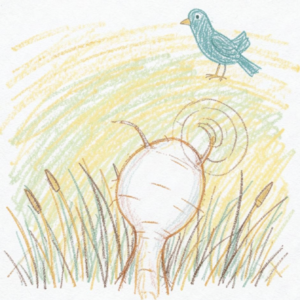
婚礼结束后,她独自来到开赛河边,看见刚刚萌发的木薯新叶。
木薯是开赛河流域最重要的粮食作物之一。它能够在贫瘠的土地上生长,即使地上的茎秆被砍倒,地下的根依然会孕育新的嫩芽。因此,木薯新叶既象征战争后的土地重新复苏,也象征恩萨拉在失去理想与爱情之后,仍然选择继续生活的勇气。
《木薯新叶》采用口传民歌的形式,歌词短小、反复,围绕木薯、河流、雨水等朴素意象展开。它讲述的不是一场轰轰烈烈的爱情,而是在历史洪流中,一个普通村庄、一位普通女性,以及无数幸存者重新开始生活的故事。
Part IV – Song 4
1964. Four years after Congo's independence. Nsala is twenty-four. She is getting married.
Time: 1964
Place: A remote village on the banks of the Kasai River
The Congo gained its independence in 1960, but independence did not bring peace. In the years that followed, military mutinies, regional secessions, armed conflict, and political struggles swept across the country. Although the fighting was concentrated in certain regions, its consequences spread far beyond the battlefields, reaching even the most isolated villages along the rivers.
For generations, communities along the Kasai River had relied on cassava, maize, palm trees, and fishing for their livelihood. During the years of conflict, many young men were conscripted, fled their homes, or were killed in the fighting. Villages were left with mostly women, children, and the elderly. River transport declined, local markets disappeared, and essentials such as salt, cloth, metal tools, and medicine became increasingly difficult to obtain. Many fields lay abandoned for lack of labor, and families survived largely on hardy crops such as cassava, which could withstand poor soil and drought.
By 1964, the wounds of war had not yet healed, but life had to begin again. Weddings were celebrated once more. Fields were planted again. Children were born again. Across countless villages, people struggled to rebuild ordinary life.
Yet the war had changed both marriage and love. Healthy young men had become scarce. Many women married men much older than themselves—men who had returned from the war carrying permanent injuries. These marriages were seldom born of youthful passion. They were quiet promises to endure, to work the land together, and to keep life going.
It is within this world that Nsala enters her wedding.
As a young girl, she had quietly fallen in love with Mbemba, the village schoolteacher. He believed deeply in the dream of an independent Congo, but he was killed during the years of conflict. Enzala has never forgotten him. Yet she, too, must continue living.
After the wedding guests have departed, she slips away alone to the bank of the Kasai River. There she notices the first tender shoots of cassava pushing through the earth.
Cassava is one of the most important staple crops of the Kasai region. Even after its stalks are cut, the living root beneath the soil sends forth new green shoots. The young cassava leaf thus becomes a symbol of renewal: the land recovering after war, and Enzala finding the strength to continue after the loss of both her first love and the ideals of her youth.
Little Cassava Leaf is written in the style of a traditional oral folk song. Built from short, repetitive verses and simple images of cassava, the river, and the rain, it tells not the story of a grand romance, but of something quieter and perhaps more enduring: how an ordinary village, an ordinary woman, and countless survivors chose to begin life again in the aftermath of history.
--
Little Cassava Leaf
(Nsala’s Song — 1964)
Verse 1
Little cassava leaf,
Green in the rain.
Little cassava leaf,
Rise again.
Cut by the hand,
Dry in the sun.
New little leaves
Come one by one.
Chorus
Grow, little leaf,
By the Kasai.
Grow, little leaf,
Under the sky.
Old roots remember.
New leaves begin.
The river keeps
Everything.
Verse 2
I was sixteen.
The river was bright.
The school bell rang
In the morning light.
A young teacher stood
Under the tree.
He spoke of tomorrow.
He spoke to me.
Chorus
Grow, little leaf,
By the Kasai.
Grow, little leaf,
Under the sky.
Old roots remember.
New leaves begin.
The river keeps
Everything.
Verse 3
Today there are drums.
Today there are songs.
The village is quiet.
The night is long.
A man walks slowly.
A man walks near.
His hands are strong.
His heart is clear.
Bridge
He is not the sun.
He is not the rain.
He is a small fire
After the pain.
He does not promise
A distant sky.
He plants the cassava
And stays by my side.
Final Chorus
Grow, little leaf,
By the Kasai.
Grow, little leaf,
Under the sky.
Old roots remember.
New leaves begin.
The river keeps
Everything.
Grow, little leaf.
Do not be afraid.
After the storm,
The green will stay.
一南 | Yinan
