

 23
23 0
0音乐剧《河口之处》第四部
第五曲
--
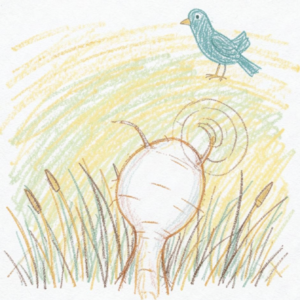
20世纪70年代中后期。故事地点仍然是开塞河(Kasai River)岸边的村庄。这时,恩萨拉已经三十五六岁。她24岁结婚,比她大十几岁的丈夫是一位善良、勤劳的农民,虽然腿有些跛,却是种地的一把好手。婚后,她生下四个孩子,但长子因疟疾和长期营养不良去世,只剩下三个孩子。为了让一家人活下去,恩萨拉每天都要到河边清洗木薯、晾晒、捣成粉,再做成木薯饼。这首歌便诞生于妇女们一起劳动的节奏之中。
1965年,蒙博托发动政变上台。1971年,他将国家改名为扎伊尔(Zaire),并推行"Authenticité(真实性)"运动,要求人民放弃欧洲名字,恢复非洲身份。他本人也将名字改为:
Mobutu Sese Seko Kuku Ngbendu wa Za Banga
(意为:"无敌的勇士,凭借坚定的意志,从胜利走向胜利,所到之处烈火燃烧。")
对于生活在偏远乡村的恩萨拉来说,这些口号既遥远又荒诞。她不反对非洲名字;她只是觉得,无论国家叫什么,无论总统的名字有多长,村里的土地依旧贫瘠,孩子依旧挨饿,木薯还是要一杵一杵地捣。
这首歌是一首充满幽默和生命力的欢快歌谣。恩萨拉一边干活,一边调侃那些高高在上的政治形式主义,把普通妇女的智慧、乐观和坚韧化作朗朗上口的歌声。这种笑声,也是普通人在艰难岁月中最顽强的抵抗。
Pound the Cassava – Song Notes (English)
"Pound the Cassava" takes place in the mid-to-late 1970s in a small village on the banks of the Kasai River. Nsala is now about thirty-five or thirty-six years old. She married at twenty-four. Her husband is an honest and hardworking farmer whose leg was injured, yet he continues to cultivate the land with determination. They once had four children, but their eldest died from malaria and chronic malnutrition. Three children remain, and every day Nsala struggles to keep them alive by preparing cassava—the staple food of the village.
The song is built around the rhythm of women pounding dried cassava into flour, turning daily labor into music.
During this period, Mobutu Sese Seko ruled the country after taking power in 1965. In 1971 he renamed the nation Zaire and launched the Authenticité campaign, encouraging Africans to abandon European names and reclaim African identity. Mobutu himself adopted the famously long name:
Mobutu Sese Seko Kuku Ngbendu wa Za Banga
—often translated as "the all-powerful warrior who goes from conquest to conquest, leaving fire in his wake."
For Nsala, however, these grand political gestures feel distant from everyday reality. She does not reject African identity. Instead, she quietly questions whether changing names can change empty bowls. While leaders debate symbols, village women still pound cassava, bury children lost to disease, and hope the next harvest will be kinder.
Rather than an angry protest song, "Pound the Cassava" is a lively work song filled with humor, resilience, and quiet irony. Through laughter, rhythm, and shared labor, Nsala reminds us that ordinary people survive history not through slogans, but through work, courage, and an unbreakable will to live.
--
Song 5 — Pound the Cassava
(Women's Work Song, late 1970s)
Verse 1
I pound.
You pound.
Dust in the air.
The river runs.
The children wait.
The pot is bare.
One child gone.
Three still cry.
So lift again.
The sun is hot.
The hands are hard.
Tomorrow then.
Pre-Chorus
New words.
New flags.
New names to say.
Old hunger
finds us
every day.
Chorus
Pound, pound,
don't stop now.
Pound till the flour is white.
Laugh, laugh,
don't fall down.
Morning will come tonight.
River flow.
Children grow.
If they eat, we sing.
Pound, pound,
don't stop now.
Life is a stubborn thing.
Verse 2
The chief says,
"Use African names!"
Good.
The river
never cared.
The cassava
never cared.
Can a long name
fill a bowl?
Can a speech
feed a soul?
Bridge (spoken over rhythm)
His name grows longer.
My hoe stays the same.
His papers grow thicker.
My children stay thin.
Well—
Give me short names.
Give me full bowls.
Then I'll clap for everyone.
Final Chorus
Pound, pound,
don't stop now.
Pound till the flour is white.
Laugh, laugh,
don't fall down.
Morning will come tonight.
River flow.
Children grow.
Hands are strong again.
Pound, pound,
don't stop now.
We'll start again.
Again.
Again.
