

 1230
1230 19
19大家久等,竭尽全力在《可能的爱情》官方首映场结束后马上献上这期影评节目。对于《可能的爱情》,我的评价尚还在《燃烧》之上,或者说直到看到这部片,我对李沧东的敬佩才彻底五体投地。大师就是只要一出手,同类型有所相通的《无可奈何》和《寄生虫》仿佛都降了一档,显得不再那么耀眼。
中文译名《可能的爱情》有点太片面了,因为片中所涵盖的范围之广远非一场婚外恋可以概括的。更合适本片的名字应该是《可能的爱》,它在影片里出现最早的地方,是在赵寅成饰演的高富帅与赵汝贞饰演的纪录片导演妻子的对话当中。“我可是会用爱意包围我的拍摄对象的”,赵汝贞这样说着,由此引发了对一系列关系的讨论,富人对穷人、资本对工人、权力机构对一个默默付出半生心血的勤恳公民,他们之间的爱究竟是可能的吗?
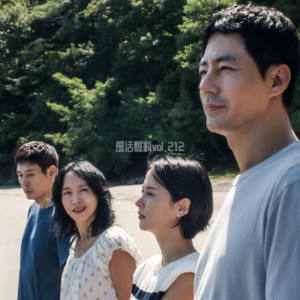
全度妍饰演的美玉突出了角色的美感,不光来自于红润的面色,更来自于她从尘埃里开花的生命力,她那么爱护自己的丈夫,又并非一味地服从。她或许望向过一个理想情人所带来的美好,但清醒时分,她用全裸的赤诚表现,完成了最为狡黠而有力的反击。薛景求饰演的浩锡,他的眼中贮藏着化不开的悲伤,国家、战友、同伴一一背叛了他,这让他变得沉默寡言,也铸就了剃刀般锋锐的目光,薛景求出色地塑造了一个满身伤痕的中年男人,善良的底线让他从不逾矩,却也有着坚决的抵抗。赵寅成“尚宇”这个角色同样寡言少语,但他总带着一种上位者的随性与轻浮,他的表演成功撕开了人物和善的伪装,显露出一种猎手捕食般的贪婪欲望。
势大力沉,振聋发聩,雕刻时光,在呢喃的年代,他的诗意润物无声,在呐喊的年代,他的出鞘锋芒毕露,这才是当之无愧的大师之象。

开胃菜
《尼尔森先生,你杀人了吗?》的不适与沉浸
主菜
《可能的爱情》在李沧东电影中的序列
现有片名不够准确
从《可能的爱情》展开,大师之作都有什么共同特质?
起手式:势大力沉
纪录片导演艺智对于裁员员工家属美玉一家人的渗透
大处着眼:振聋发聩
失业与阶级矛盾,东亚社会两大问题展露无余
小处着眼:雕刻时光
四大主演各自的表现
李沧东的自我突破
本片可当作韩国十年内的时间切片
甜点
SHOWNOTES IN ENGLISH:
Sorry to keep you waiting—I’ve done our best to bring you this episode of our film review show right after the official premiere of Possible Love. As for Possible Love, I rate it even higher than Burning—or rather, it wasn’t until I saw this film that my admiration for Lee Chang-dong truly reached the point of utter awe. A true master—whenever he creates something, films in the same genre, such as No other choice and Parasite, seem to pale in comparison and lose some of their luster.
The Chinese title Possible Love is a bit too narrow, as the film’s scope far exceeds that of a mere extramarital affair. A more fitting title would be Possible Loves, a phrase that first appears in a conversation between the wealthy, handsome man played by Zo In-sung and the documentary director’s wife, played by Cho Yeo-jeong. “I surround my subjects with love,” says Jo Yeo-jeong, sparking a discussion about a series of relationships: between the rich and the poor, between capital and labor, and between institutions of power and a diligent citizen who has quietly devoted half life to his work. Is love truly possible between them?
Jeon Do-yeon’s portrayal of Mi-ok highlights the character’s beauty, which stems not only from her rosy complexion but also from her vitality—like a flower blooming from the dust. She cherishes her husband deeply yet is far from blindly obedient. She may have once yearned for the beauty an ideal lover could bring, but in her moments of clarity, she delivers the most cunning and powerful counterattack through her unadulterated sincerity. Ho-seok, played by Sul Kyung-gu, harbors an indelible sadness in his eyes. Betrayed one by one by his country, comrades, and companions, he has become taciturn, yet his gaze remains razor-sharp. Sul Kyung-gu masterfully portrays a middle-aged man scarred by life; his innate kindness ensures he never crosses the line, yet he offers resolute resistance. Zo In-sung’s character “Sang-woo” is equally taciturn, yet he always carries the nonchalance and frivolity of a man in power. His performance successfully strips away the character’s facade of kindness, revealing a predatory greed akin to that of a hunter.
Powerful and resonant, deafening and stirring, carving through time—in an era of whispers, his poetry nourishes silently; in an era of shouts, his blade is drawn and its sharpness fully revealed. This is the true image of a master, without a doubt.
The Discomfort and Immersion of Mr. Nielsen, Did You Kill People?
Main Course
Possible Love in the Context of Lee Chang-dong’s Filmography
The Current Title Is Inaccurate
Starting with Possible Love: What Common Traits Do Masterpieces Share?
Opening Move: Powerful and Impactful
Documentary Director Ye-ji’s Intimate Portrayal of Mi-ok’s Family, Relatives of a Laid-Off Worker
The Big Picture: A Wake-Up Call
Unemployment and class conflict—two major issues in East Asian society laid bare
Focusing on the Details: Carving Out Time
The Performances of the Four Lead Actors
Lee Chang-dong’s Personal Breakthrough
This Film Can Be Seen as a Snapshot of South Korea Over the Past Decade
Dessert