
 278
278 0
0
【听友福利】
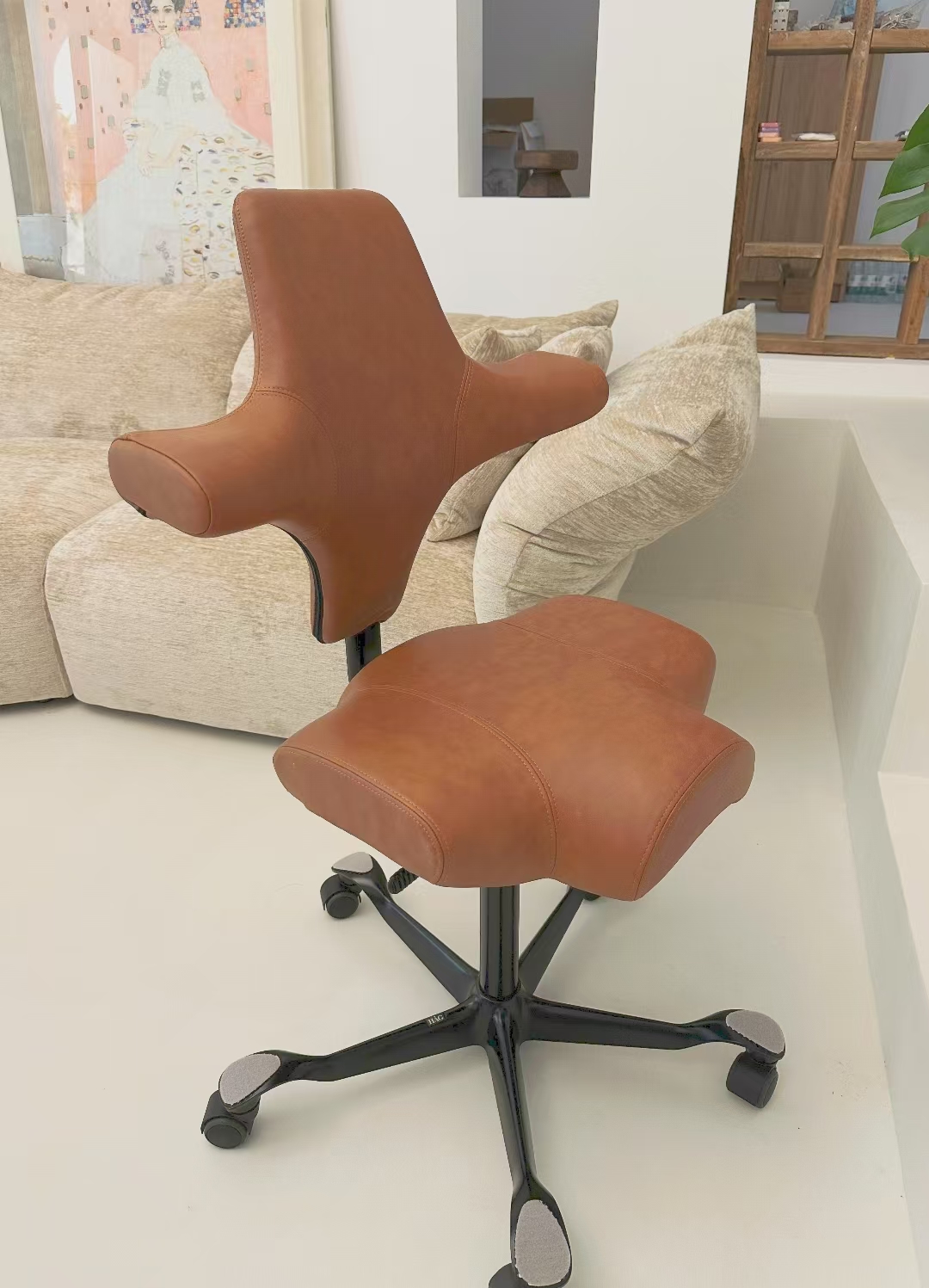
感谢赞助商 Flokk——挪威高端办公家具集团,旗下 HÅG 是欧洲销量第一的办公椅品牌。今天聊它最核心的理念"主动坐姿":大部分椅子让你一动不动地"坐"着,而主动坐姿让身体坐着时保持轻微持续的活动,独立重复验证的对比实验显示,日常能量消耗能高出 7% 到 19%。代表产品 Capisco 骑马椅出自挪威国宝级设计师 Peter Opsvik,灵感来自骑马——人在马背上坐姿反而最有活力,鞍座结构让骨盆保持主动角度,正坐、侧坐、反坐都行,核心和臀部一直参与。对练力量的人更关键:坐着的八小时臀部一直关闭,晚上深蹲硬拉的激活和质量都会打折扣。"最好的坐姿,永远是下一个。"感兴趣的话,官方平台报暗号"自然之路"领券下单。
口令 dbisRWN4THGL。
找客服报暗号(自然之路)领券下单
【线下课程报名】
赤足训练课程:
10月17-18日 深圳站
11月14-15日 北京站
灵活与稳定课程:
11月7-8日 深圳站
11月28-29日 北京站
【内容简介】
一天坐十个小时,晚上练那一小时真的补得回来吗?
这期把久坐一次讲透:久坐到底伤在哪、对髋关节和臀肌的真实影响、「骨盆前倾」要不要焦虑、主动坐姿里哪些说法站得住脚、哪些只是营销话术。后半部分是明天上班就能用的方案:怎么把久坐切碎、升降桌怎么用才对、工位 5 分钟检查清单、该练哪几块肌肉、激活放在训练开头还是结尾。
最好的坐姿,永远是下一个。
【收听攻略】
02:34 正题:一天久坐近 10 小时
03:44 久坐的真相:风险与研究
05:55 柳叶刀:60–75 分钟运动才抵消久坐
07:44 关键实验:坐 20 分钟走 2 分钟
09:01 对髋和臀的影响(髂腰肌/骨盆前倾/臀肌)
14:02 三个自测:托马斯测试 / 单腿站 / 单腿臀桥
17:14 坐姿真相:没有标准坐姿,常换才对
20:22 主动坐姿:好处与辟谣(瑜伽球不练核心)
25:15 实操:每 30 分钟动 1–2 分钟
28:28 升降桌:坐站轮换(坐20/站8/走2)
30:39 5 分钟工位调整清单
35:06 训练动作:髋前侧拉伸 / 髋铰链 / 臀中肌
38:35 总结
40:06 简单行动:现在就设 30 分钟闹钟
【参考文献】
久坐与健康风险
1. Morris JN, Heady JA, Raffle PAB, Roberts CG, Parks JW. (1953). Coronary heart-disease and physical activity of work. The Lancet.
2. Buckley JP, Hedge A, Yates T, et al. (2015). The sedentary office: an expert statement on the growing case for change towards better health and productivity. British Journal of Sports Medicine.
3. Ekelund U, et al. (2016). Does physical activity attenuate, or even eliminate, the detrimental association of sitting time with mortality? A harmonised meta-analysis of data from more than 1 million men and women. The Lancet.
4. Dunstan DW, et al. (2012). Breaking up prolonged sitting reduces postprandial glucose and insulin responses. Diabetes Care.
5. Diaz KM, et al. (2017). Patterns of sedentary behavior and mortality in U.S. middle-aged and older adults: a national cohort study. Annals of Internal Medicine.
髋、臀与骨盆
1. Herrington L. (2011). Assessment of the degree of pelvic tilt within a normal asymptomatic population. Manual Therapy.
2. Harvey D. (1998). Assessment of the flexibility of elite athletes using the modified Thomas test. British Journal of Sports Medicine.
3. McGill S. Low Back Disorders: Evidence-Based Prevention and Rehabilitation. Human Kinetics.
坐姿与主动坐姿
1. Slater D, Korakakis V, O'Sullivan P, Nolan D, O'Sullivan K. (2019). "Sit up straight": time to re-evaluate. Journal of Orthopaedic & Sports Physical Therapy.
2. Gregory DE, Dunk NM, Callaghan JP. (2006). Stability ball versus office chair: comparison of muscle activation and lumbar spine posture during prolonged sitting. Human Factors.
3. Kingma I, van Dieën JH. (2009). Static and dynamic postural loadings during computer work in females: sitting on an office chair versus sitting on an exercise ball. Applied Ergonomics.
4. Koepp GA, Moore G, Levine JA. (2017). An under-the-table leg-movement apparatus and changes in energy expenditure. Frontiers in Physiology.
升降桌与站立办公
1. Shrestha N, et al. (2018). Workplace interventions for reducing sitting at work. Cochrane Database of Systematic Reviews.
2. Smith P, et al. (2018). The relationship between occupational standing and sitting and incident heart disease over a 12-year period in Ontario, Canada. American Journal of Epidemiology.
产品背景
1. Flokk. The HÅG Capisco: Celebrating 40 years of design innovation. focus.flokk.com.(Capisco 于 1984 年推出,设计师 Peter Opsvik)
