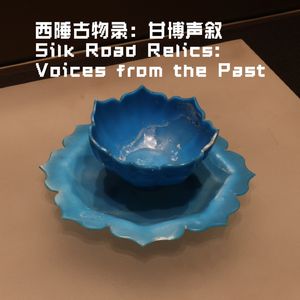

- Ep011.“西陲古物录:甘博声叙·琉璃宝盏”
主播:Spencer 编辑:Lotus 本期解析宋元丝绸之路的格局变迁,核心展品为宋代瓷器与元代玻璃莲瓣盏托。受战争、疆域变动影响,陆上丝路走向衰落,海上贸易上升为主流,但西北旧通道并未彻底废弃,持续输送域外技艺。这件元代琉璃宝盏的原料与烧制工艺源自西亚,传入后经本土工匠改良,化为中式茶酒器具。器物钴蓝温润通透,带有手工烧制气泡,杯刻七瓣莲、盏托刻八瓣莲;在元代,成套高品质琉璃器皿远比金银器物珍贵,仅供贵族使用。目前学界对其功用仍存分歧,无法判定是酒器还是茶盏,这份未解之谜赋予文物独特的学术魅力。唐代丝路交流仰仗商旅个体往来,而宋元转向工艺技术的传播融合,文明交融融入日常、代代传承。下期将跳出工艺维度,从文化符号视角解读明清多元文化交融。 This episode analyzes the transformation of the Silk Road in Song‑Yuan dynasties, focusing on Song porcelain and the Yuan‑dynasty glass lotus cup‑and‑saucer. Wars and territorial changes led to the decline of overland routes while maritime trade prevailed, yet northwest passages still introduced foreign technologies. Imported from West Asia, the glass set was localized by Chinese craftsmen into traditional tableware. With mild cobalt‑blue transparency and handmade air bubbles, it has seven lotus petals on the cup and eight on the saucer. Complete high‑quality glassware was rarer than gold‑silver objects and reserved for nobles. Scholars haven’t reached consensus on whether it was a wine vessel or teacup, and the open debate adds special academic value. Different from Tang exchanges via individual travelers, Song‑Yuan cultural integration relied on craft diffusion rooted in daily life. The next episode will explore Ming‑Qing cultural integration through cultural symbols. 时间轴 Time Axis 00:00 宋元贸易格局转变与手工业繁荣 Shifts of Trade and Thriving Handicraft Industry from Song to Yuan Dynasties 01:40 元代玻璃莲盏托:域外技艺与本土工艺的融合 Yuan Dynasty Glass Lotus Cup and Saucer: A Fusion of Foreign Techniques and Local Chinese Craftsmanship 03:16 宋元丝绸之路的核心转型 Key Transformation of the Silk Road During the Song and Yuan Dynasties 04:06 文化贴士 & 下期预告:宋元工艺洞察与明清文化符号 Today's Cultural Tip & Preview: Insights into Song‑Yuan Crafts and Ming‑Qing Cultural Symbols BGM: 琼花映蕊 Immaculate Ardency(HOYO-MiX) 景玉朝明(铁痕电台-MSR/Gareth Coker)
5分钟 · 13
 0
- Ep010.“西陲古物录:甘博声叙·三彩驼踪”
主播:Spencer 编辑:Lotus 简介:本期介绍唐三彩粟特商人牵驼俑。俑中胡人深目高鼻、蓄须戴尖顶毡帽,身着翻领窄袖胡服,手中紧控驼缰;骆驼昂首欲鸣,通体施以黄、绿、白三彩釉,鲜活还原了丝路商队整装待发的图景。这件文物出土于地方普通墓葬,墓主推测为民间商人,并非官宦贵族或寺院遗存,印证唐代开放风气不止通行于上层,已深入民间认知,也承载着时人对遥远西域的想象。本期另附文化贴士,解析“唐三彩”中“三”为虚指、表“多”的古汉语用法。 This episode introduces the Tang Sancai figurine of a Sogdian merchant leading a camel. The figure depicts a Central Asian merchant with deep-set eyes, a high nose and a mustache, wearing a pointed felt hat and a narrow-sleeve coat with a turned-down collar, holding the camel's rein firmly. The camel raises its head as if neighing, glazed with the classic yellow, green and white colors of Tang tri-color pottery, vividly presenting a Silk Road caravan ready to depart. Unearthed from an ordinary local tomb presumably owned by a civilian merchant, not from a noble grave or Buddhist temple, this artifact proves that the open ethos of the Tang Dynasty was not limited to the upper class but had reached ordinary people, and carries locals' imagination of the distant Western Regions. A cultural tip is included to explain that the character "three" in "Tang Sancai" is a general term meaning "many" in ancient Chinese. 时间轴 Time Axis 00:31 三彩胡商俑概览 Sogdian Merchant Figurine Overview 02:23 出土背景与民间交流 Excavation Context and Folk Exchange 03:12 与舍利宝函的文化对照 Cultural Comparison with the Sarira Reliquary 04:39 文化贴士:“三彩”的含义 Cultural Tip: The Meaning of "Tri-color"
5分钟 ·270 - Ep009.“西陲古物录:甘博声叙·宝函气象”
主播:Spencer 编辑:Lotus 简介:本期介绍泾川大云寺唐代舍利宝函,这套五重嵌套宝函制于武则天时期,由石函、铜椁、银椁、金棺与琉璃宝瓶逐层嵌套而成,通体雕刻花云瑞兽纹样并镶嵌宝石,是皇家主持的官方佛事仪式产物。1964年被当地农民意外发现,整套保存完好,既是唐代工艺水平与宗教信仰的实证,也印证了开放交流造就的盛唐气度。 This episode introduces the Tang Dynasty sarira reliquary from Dayun Temple in Jingchuan. Made during the reign of Wu Zetian, this five-layer nested set consists of a stone box, bronze casket, silver outer coffin, golden coffin and inner glass vase, carved with exquisite patterns of flowers, clouds and auspicious beasts and inlaid with gems, as a product of imperial official Buddhist rituals. Accidentally discovered by local farmers in 1964 and fully preserved, it serves as evidence of Tang Dynasty craftsmanship and religious beliefs, and also confirms the prosperous demeanor of the Tang Dynasty fostered by open exchanges. 时间轴 Time Axis 00:01 舍利宝函概览 Sarira Reliquary Overview 01:43 宝函的发现与由来 Discovery and Origin of the Reliquary 03:11 宝函的文化价值 Cultural Value of the Reliquary 03:48 文化贴士 Cultural Tips
5分钟 ·900 - Ep008.“西陲古物录:甘博声叙·乱世之融”
主播:Spencer 编辑:Lotus 简介:本期甄选三件魏晋南北朝代表性文物,展现公元220至589年乱世之下绵延不绝的文化与民族联结。嘉峪关出土的驿使画像砖印证古代邮驿的守密准则,西晋颁赐的金印是中央与西北民族和平交往的实证,炳灵寺石窟承载乱世中的佛教信仰与早期艺术风貌。驿使画像砖如今已成为中国邮政的官方标志,其纹样仍见于各类邮票之中。 This episode selects three representative cultural relics of the Wei, Jin, Southern and Northern Dynasties, showing the continuous cultural and ethnic connections amid the turbulent era from 220 A.D. to 589 A.D. The postal messenger portrait brick unearthed near Jiayuguan reflects the confidentiality rule of ancient postal systems; the golden seal bestowed by the Western Jin Dynasty is solid evidence of peaceful exchanges between the central government and northwest ethnic groups; Bingling Temple Grottoes carry Buddhist beliefs and early artistic features in the turbulent times. The postal messenger portrait brick has now become the official symbol of China Post, with its pattern still seen on various stamps. 时间轴 Time Axis 00:00 时代背景与驿使画像砖 Era Background and Postal Messenger Brick 02:10 西晋颁赐金印解析 Interpretation of Western Jin Golden Seal 03:18 炳灵寺石窟与文化内核 Bingling Temple Grottoes and Cultural Core 05:19 文化贴士 Cultural Tips
6分钟 ·770 - Ep007.“西陲古物录:甘博声叙•简牍传心”
主播:Spencer 编辑:Lotus 武威磨嘴子出土的《仪礼》简保存原始儒家典籍;王杖简记载汉代敬老律法;医药简留存药方,见证丝绸之路医药交流。戍边简记录士兵琐事与未寄出家书,潦草字迹还原古人真实生活。简牍恒温珍藏,新技术辅助,但仍需学者人工释读。铜车马代表贵族,简牍承载平民烟火。文末科普:纸张普及前简牍是主流书写载体,比甲骨青铜易用、比丝绸价廉,晋代逐步退出日常。 The Book of Rites slips preserve original Confucian texts. Imperial Cane slips record elderly‑respecting laws, and medical slips reflect Silk Road medical exchanges. Frontier slips record soldiers’ daily life and undelivered letters, with rough handwriting showing real ancient lives. Stored in temperature‑controlled vaults, they need both new tech and manual research. Unlike noble‑oriented bronze chariots, slips reflect ordinary people. Before paper, slips were major writing materials, cheaper and handier, until the Jin Dynasty. BGM: 景玉朝明 铁痕电台-MSR/Gareth Coker 望海潮 洪尘 国风配乐 凯枫
8分钟 ·840 - Ep006.“西陲古物录:甘博声叙•仪仗奔马”
主播:Spencer 编辑:Lotus Discovered accidentally by a local farmer in Wuwei in 1969, the Bronze Chariots and Horses of Lei Tai are precious Eastern Han cultural relics buried for around 2,000 years. The whole set consists of 39 bronze horses, 14 chariots and dozens of bronze human statues, which were badly damaged when unearthed and later reconstructed into a complete noble ceremonial procession with clear rank-based layouts of carriages and warriors. Experts once assumed they were made via lost-wax casting, but scientific checks in 2019 confirmed separate piece casting plus internal iron cores for structural support. Uneven bronze quality shows the works were produced in different workshops and circulated along the ancient Hexi Corridor of the Silk Road. The tomb’s owner is still unknown though a vague seal with “Zhang Jiang” was found; experts believe he was a high-ranking Han official. Long debates continue over the bird under the iconic flying horse’s hoof, yet the name “Galloping Horse Treading on a Flying Swallow” put forward by Guo Moruo gained nationwide popularity. Now displayed in museum, these bronze treasures silently record ancient history and connect people across centuries.
8分钟 ·910 - Ep005. “西陲古物录:甘博声叙·悬泉之证”
主播:Spencer 编辑:Lotus 简介: 悬泉置木简藏于甘肃省博物馆,看似朴素,却承载着两千多年前丝绸之路的珍贵历史记录。因山间清泉得名的悬泉置,是汉代丝绸之路上的官方驿站,接待西域各国使团往来中原。木简详实记载了接待礼仪、行程里程、物资供给等细节,体现汉代完备的驿站制度,见证中原与西域的频繁友好往来,是丝路繁荣与中外交流的重要实物证据,也是丝路文明的无声讲述者。 Introduction: The Xuanquan Post Station wooden slips are collected in Gansu Provincial Museum. They look plain, but carry precious historical records of the ancient Silk Road more than 2,000 years ago. Named after a clear spring in the mountains, Xuanquan Post was an official station on the Silk Road in the Han Dynasty, receiving envoys from various Western Regions traveling to the Central Plains. The slips carefully record reception etiquette, travel mileage, material supplies and other details. They show the complete post system of the Han Dynasty, witness frequent friendly exchanges between the Central Plains and the Western Regions, serve as important physical evidence of Silk Road prosperity and exchanges, and are silent narrators of Silk Road civilization. 时间线: 0:00 开篇 0:55 正文介绍 3:45 总结 Time Axis: 0:00 Opening 0:55 Introduction 3:45 Summary BGM: 春景故人来 铁痕电台-MSR/Kirara Magic 国风配乐 凯枫
5分钟 ·1460 - Ep004.“西陲古物录:甘博声叙·灯鼎青铜”
主播:Spencer 编辑:Lotus 简介: 战国鼎形铜行灯1974年出土于甘肃平凉战国秦墓,是甘博镇馆之宝、国家一级文物,为战国便携照明巅峰之作,亦是早期丝路文明的代表性器物。它可合为鼎、开为灯,榫卯卡扣密封防漏,青铜材质工艺精湛,是礼器生活化的典范,既印证秦国手工业水准,也映射出战国甘肃的社会生活与早期东西方文明交流,诠释了“器以载道”的文化内涵。 Introduction: Unearthed in 1974 from a Warring States Period Qin tomb in Pingliang, Gansu, the bronze portable lamp is a treasure of Gansu Provincial Museum and a national first-class cultural relic. It is the pinnacle of portable lighting in the Warring States Period and a typical artifact of the budding early Silk Road civilization. It can be closed as a tripod and opened as a lamp, with a mortise and tenon buckle for sealing and leak-proofing, and exquisite bronze casting technology. A model of turning ritual vessels into daily use, it testifies to the handicraft level of the Qin State, reflects the social life of Gansu and early East-West cultural exchanges, and interprets the cultural connotation of "devices carry the way". 时间线: 0:00 重见天日 3:56 工匠巧思下的丰富内涵 5:35 总结 Time Axis: 0:00 Rebirth from the Earth 3:56 The Artisan’s Vision and Hidden Meanings 5:35 Closing
9分钟 ·1500 - Ep003. “西陲古物录:甘博声叙·漩彩之舞”
主播:Spencer 编辑:Lotus 简介: 本期节目聚焦于马家窑彩陶这一黄河上游的文化瑰宝,解锁五千年前藏于彩陶旋纹中的文明密码。从甘肃临洮诞生的马家窑彩陶,是新石器时代制陶工艺的典范,其核心旋纹纹样脱胎于先民对洮河自然水景的观察,凝萃天地韵律,既诠释着古人对黄河、宇宙与生命的思考,也寄托着对和谐秩序的向往。彩陶兴盛背后的原始农耕文明,是从实用容器到祭祀礼器的精华。 Introduction: This episode features Majiayao painted pottery, a cultural treasure in the upper Yellow River, unlocking its 5,000-year-old civilization codes in swirling patterns. From Lintao, Gansu, it’s a Neolithic pottery masterpiece, with swirls mirroring Taohe scenery, embodying ancients’ thoughts on nature, life and harmony, evolving from practical ware to sacred sacrificial vessels thanks to primitive agriculture. 时间轴: 0:00 开篇引入马家窑彩陶 0:30 述诞生地与制陶地位 1:00 解旋纹来源与内涵 2:40 讲农耕支撑与器物演变 4:21 升华文化联结意义 Time Axis: 0:00 Intro to Majiayao painted pottery 0:30 Birthplace & pottery craftsmanship status 1:00 Swirl patterns' origin and connotation 2:40 Agricultural support & ware evolution 4:21 Elevate cultural connection significance
6分钟 ·2650 - Ep002.“西陲古物录:甘博声叙·陶土之思”
主播:Spencer 编辑:Lotus 简介:人头形器口彩陶瓶作为大地湾文化珍品,现藏甘肃博物馆,高31.8厘米,距今5800年。瓶口塑人面、器身绘黑彩黄河纹,以黄河红陶900℃烧制,1973年出土于甘肃。学界解读为母系社会女性崇拜等,无蓝图制作,凝先民对生命的敬畏与对美的追求,是“活着的历史”。 Painted Pottery Vase with Human-head-shaped Spout, as a treasure of Dadiwan Culture, this vase is in Gansu Museum, 31.8cm tall and dating back 5800 years. With a human-faced spout and black Yellow River patterns, it was fired at 900℃ with Yellow River red clay and unearthed in Gansu in 1973. Interpreted as female worship in matriarchal society, it was made without blueprints, embodying ancestors' reverence for life and pursuit of beauty, a "living history". 时间轴 Time Axis 00:00 重获新生 Excavation Process 01:25 细节描述及象征 Detailed Description and Symbolism 03:30 制作过程 Manufacturing Process 04:36 总结 Conclusion
7分钟 ·2700 - Ep001.“西陲古物录:甘博声叙·丝路遗珍开篇”
主播:Spencer 编辑:Lotus 简介: 《西陲古物录:甘博声叙》正式开播!本期作为开篇,聚焦中国西北文明沃土——甘肃:这里藏着新石器时代的彩陶、青铜时代的器物、丝路之上的遗珍与唐宋佛教艺术瑰宝。本音频系列共13期,以时间为轴,用英文解锁文物背后的历史脉络、文化内涵。跟着我们,透过语言之窗,读懂甘肃文物里的中华文明与中外交流故事~ Silk Road Relics: Voices from the Past is launching! This episode focuses on Gansu—a treasure land of civilization in northwest China, which houses precious cultural relics from the Neolithic Age, Bronze Age, ancient Silk Road, and Tang-Song Buddhist art. This 13-episode audio series, presented chronologically, uses simple English to explore the historical context, cultural connotations, and artistic value of relics. Join us to understand the stories of Chinese civilization and Sino-foreign exchanges through Gansu’s relics via the window of language! 时间轴(Time Stamps): 00:00 《西陲古物录:甘博声叙》正式开播 Silk Road Relics: Voices from the Past officially launches 01:14 甘肃:不止风景,更是西北文明沃土 Gansu: More than just scenery—it’s a cradle of civilization in northwest China 03:02 13期节目播出安排:以时间轴覆盖多元文物 13-episode schedule: Covering diverse relics in chronological order 04:35 甘肃丝路渊源:文化交融催生多样文物 Gansu’s Silk Road roots: Cultural exchanges gave birth to a rich variety of relics 06:32 节目定位:文化探秘+英语节目 Program positioning: Cultural exploration + English-language program
8分钟 ·3310